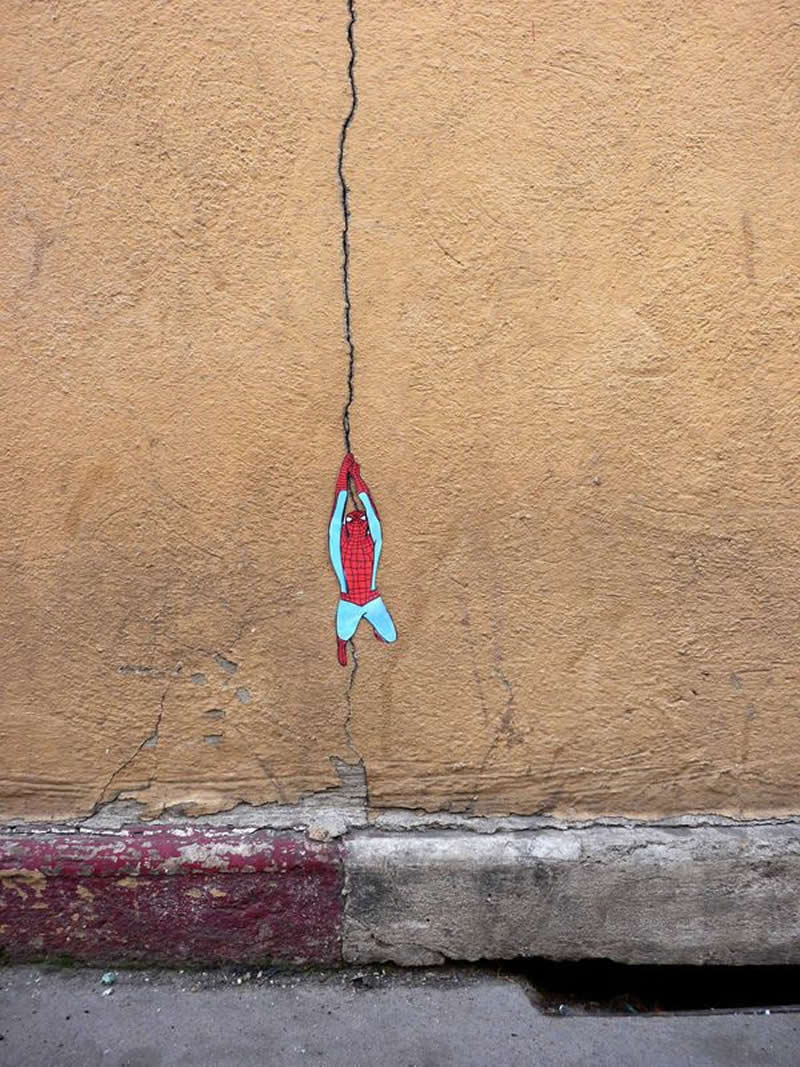
There’s street art, and then there’s OakOak, the kind that sneaks up on you when you least expect it. You’re walking down a random street, minding your business, and suddenly… boom. A crack in the wall turns into a cartoon scene. A broken sidewalk becomes a punchline. That’s OakOak’s world, and honestly, it hits different.
Based in Saint-Étienne, France, this self-taught artist has been flipping urban decay into clever, tiny masterpieces since the early 2000s. He doesn’t chase massive murals or flashy installs. Instead, he zooms in on the stuff most people ignore, cracks, pipes, manholes, and transforms them into playful, thought-provoking visuals. It’s minimal, it’s witty, and it’s ridiculously smart.
Inspired by comic books and cartoons, OakOak brings a sense of humor and curiosity into every piece. His art feels like a conversation with the city itself, like the streets are alive and low-key joking with you. And the best part? You don’t need to be an art expert to get it. You just need to slow down and actually look.
These 33 creative moments are more than just street art; they’re perspective shifts. Tiny reminders that creativity lives in the overlooked, the broken, and the everyday.
You can find more info about OakOak:
#1
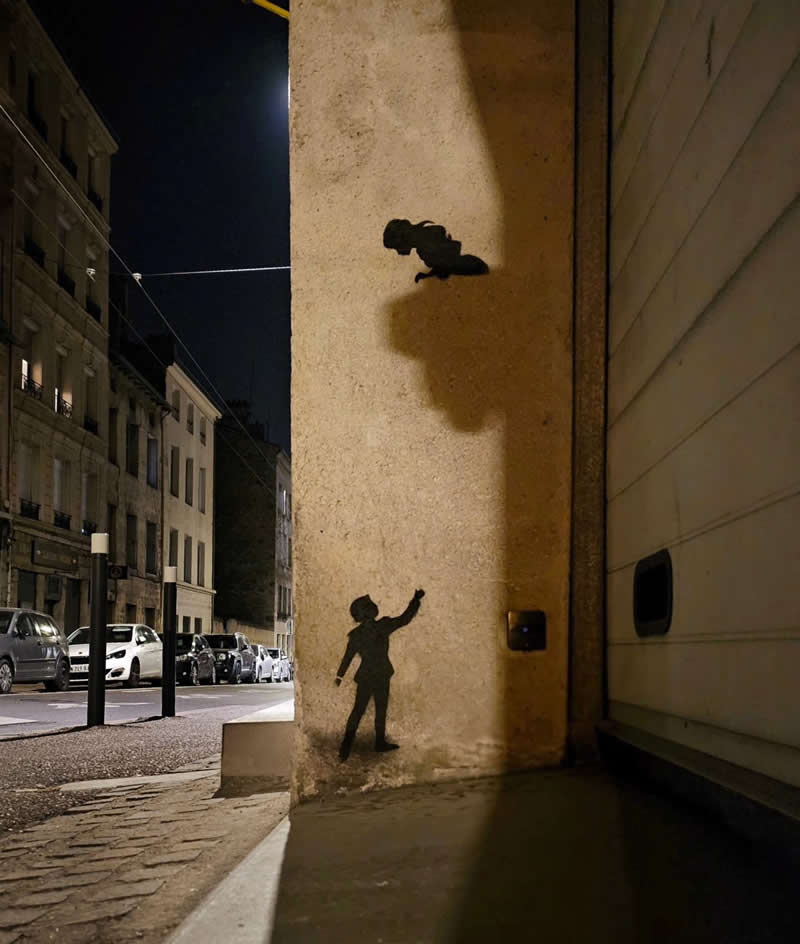
#2
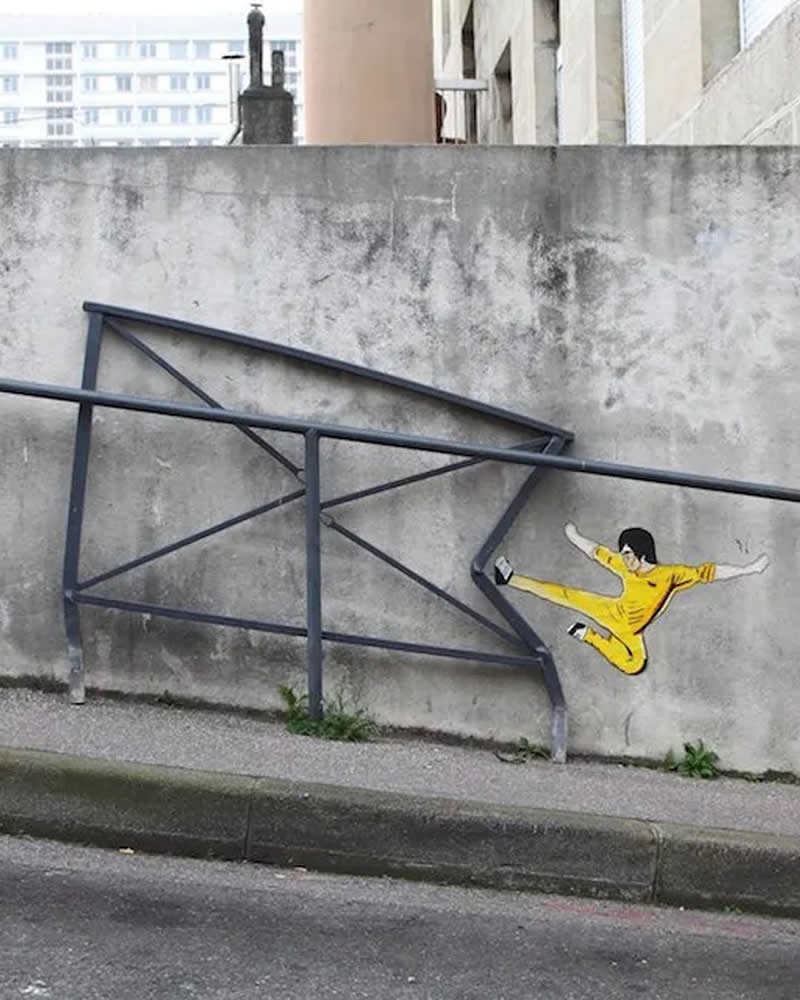
#3
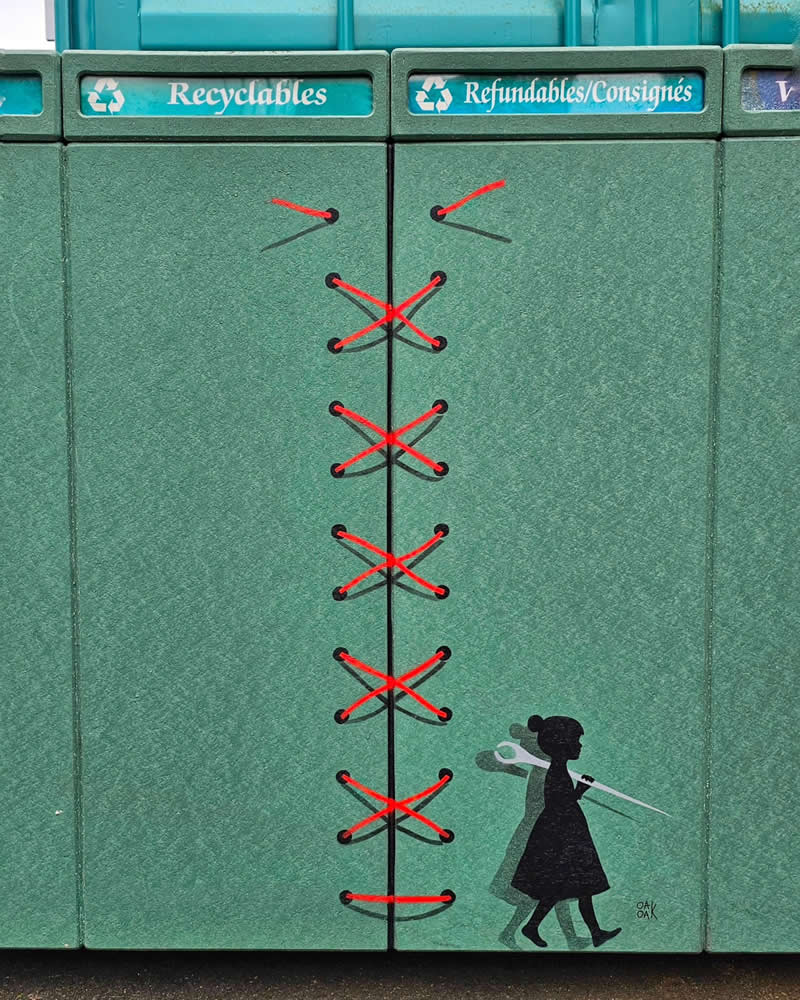
#4
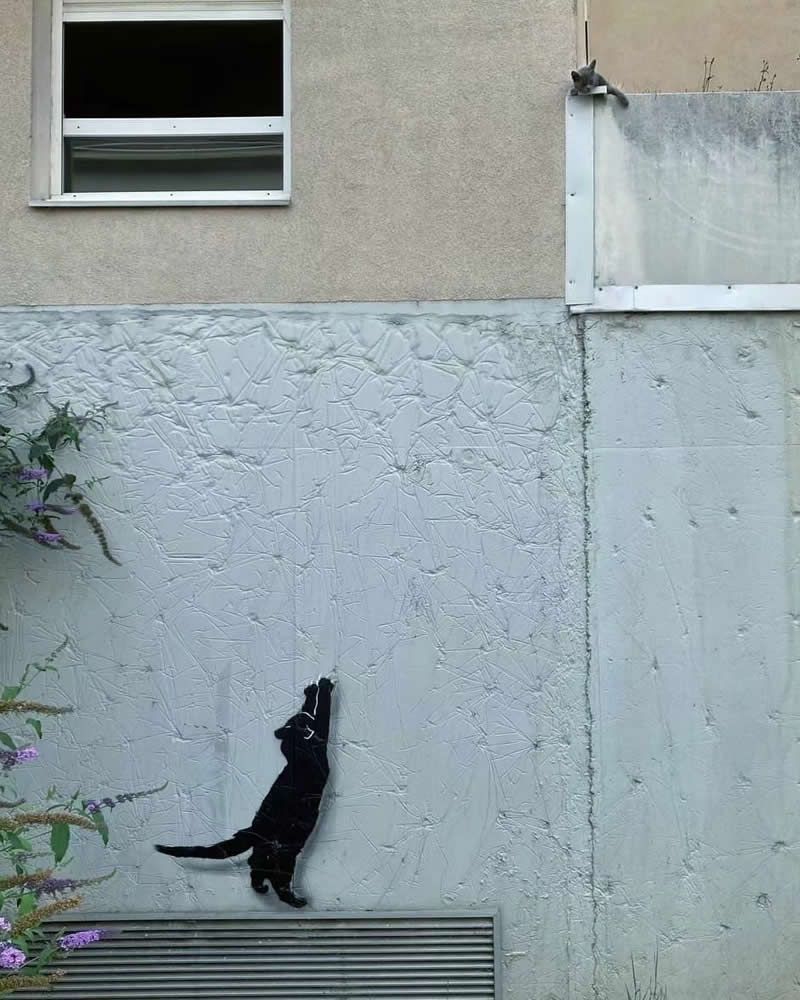
#5
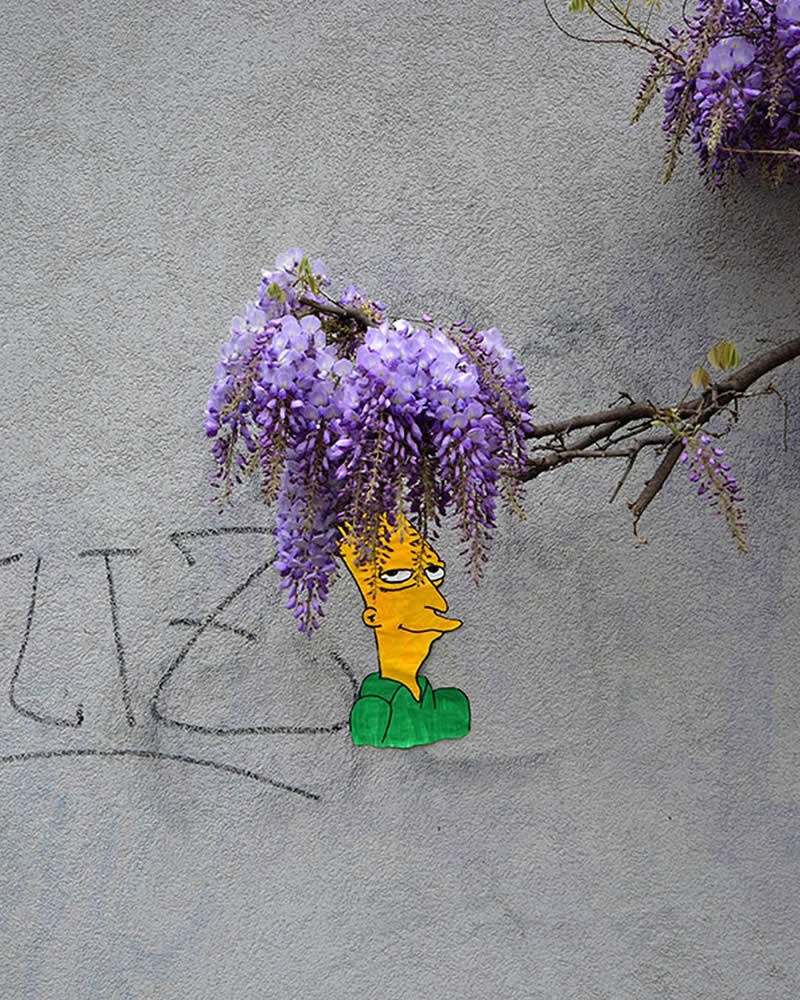
Turning Cracks into Conversations
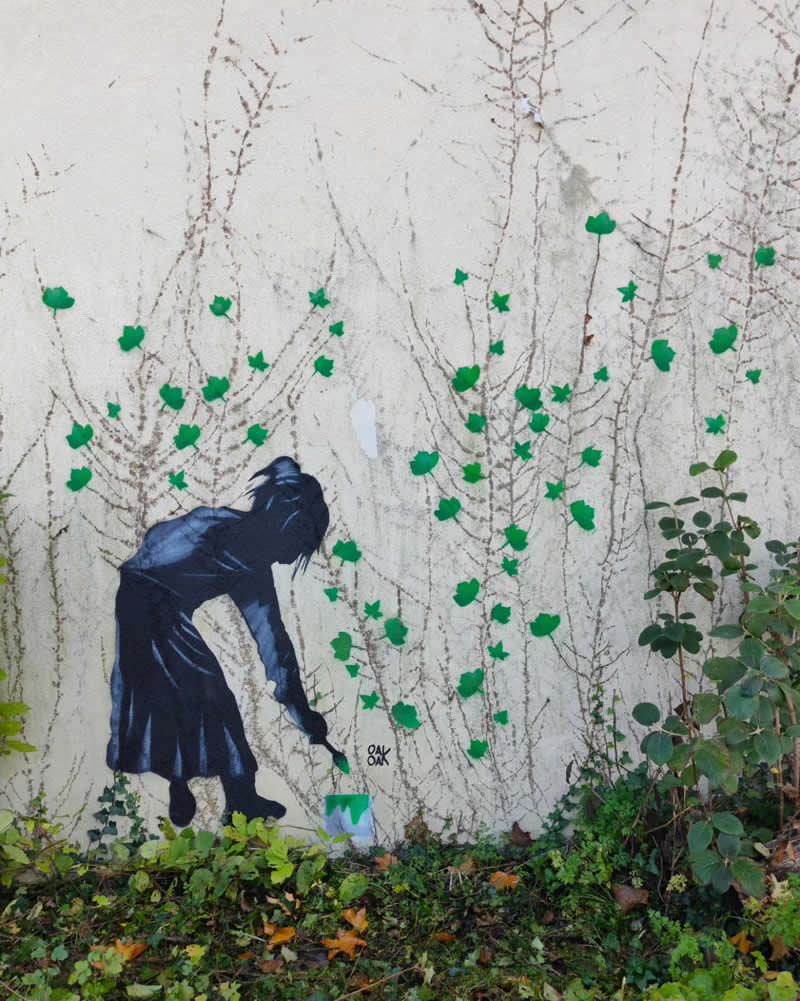
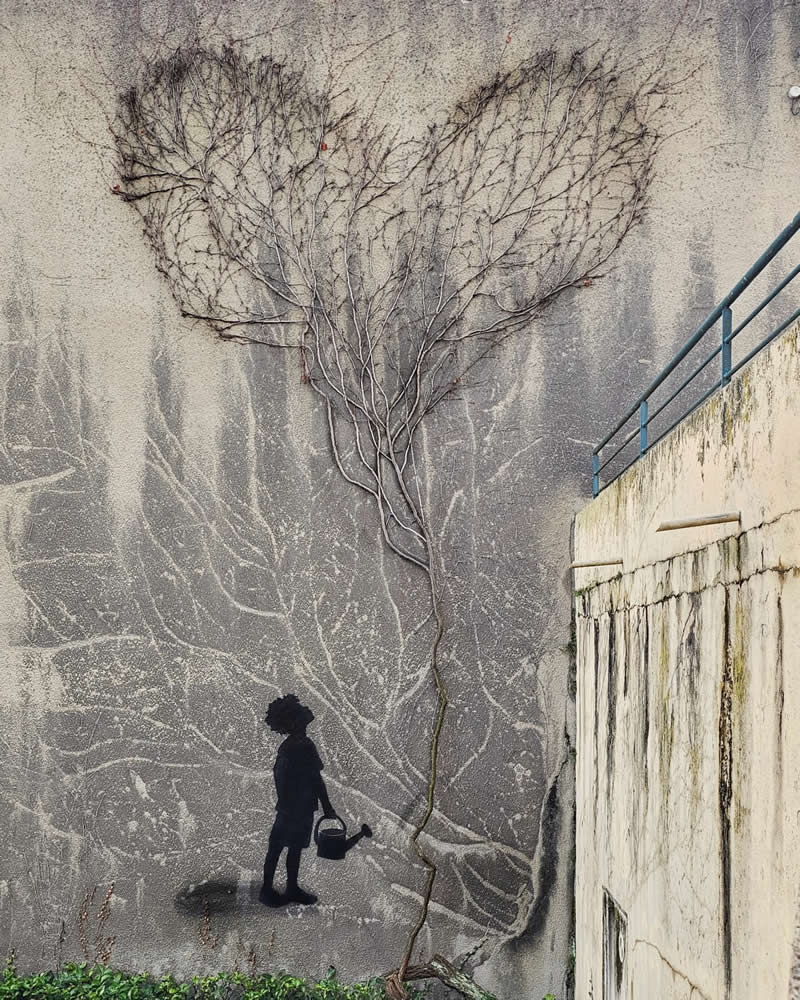
OakOak doesn’t fix the city; he talks it through. Every crack, dent, or chipped wall becomes part of a story. Where most people see damage, he sees opportunity. It’s like he’s decoding the street and remixing it into something playful and unexpected.
A split in the pavement might turn into a cartoon mouth. A broken edge becomes a cliff in a tiny illustrated world. And suddenly, something boring becomes unforgettable.
That’s the magic he doesn’t add much, but what he adds changes everything. It’s subtle but powerful. Once you notice it, you start seeing potential everywhere. The streets stop being static and start feeling alive, full of hidden narratives just waiting to be discovered.
#6
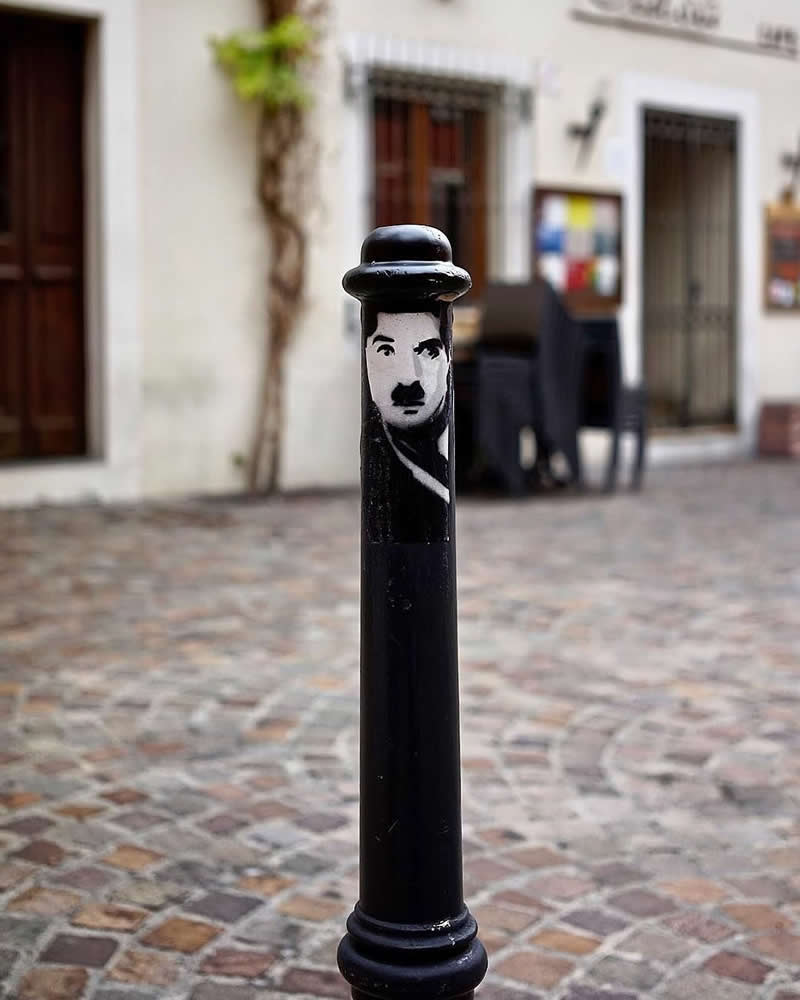
#7
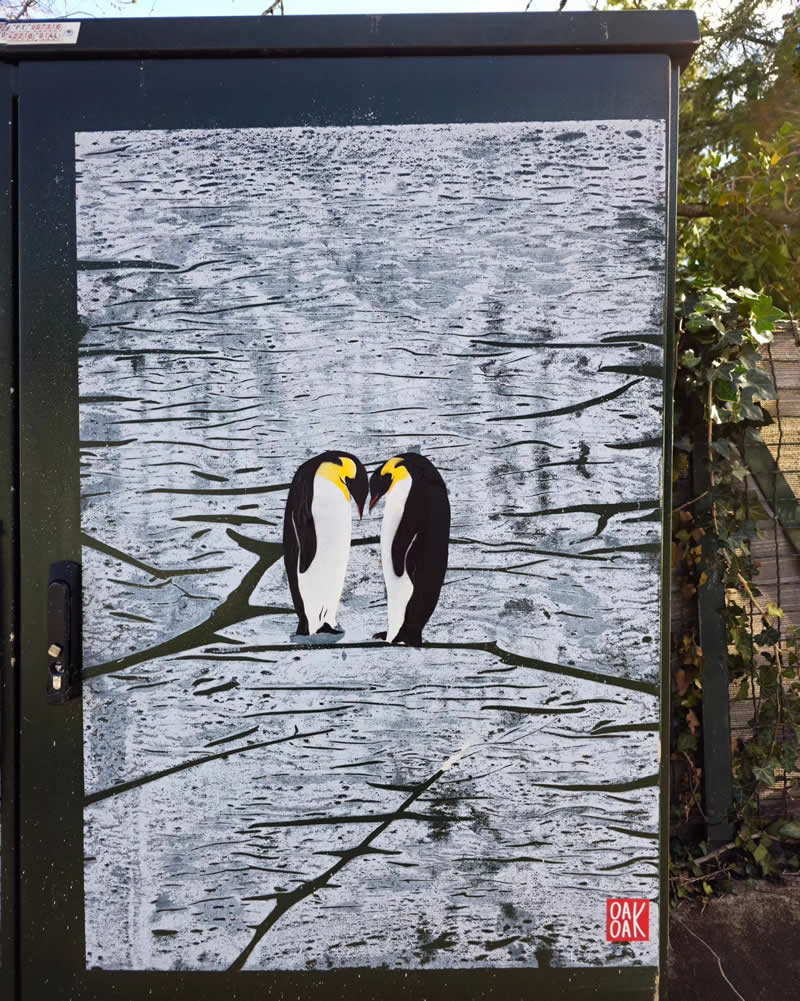
#8
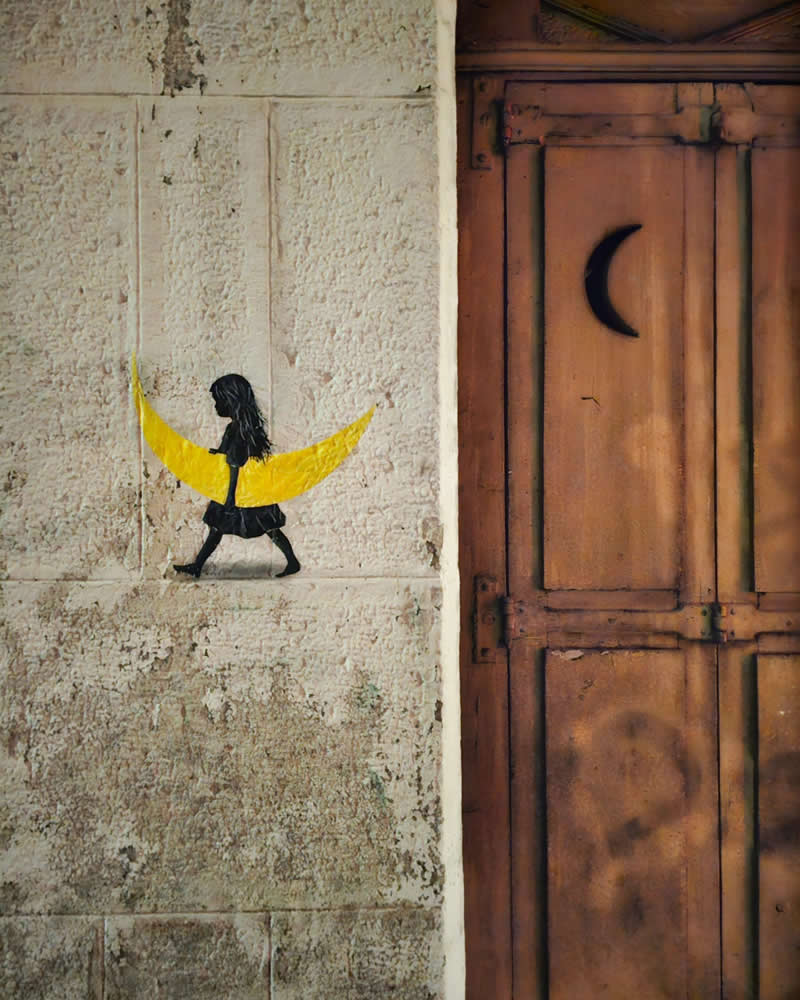
#9
#10
Minimalism That Packs a Punch
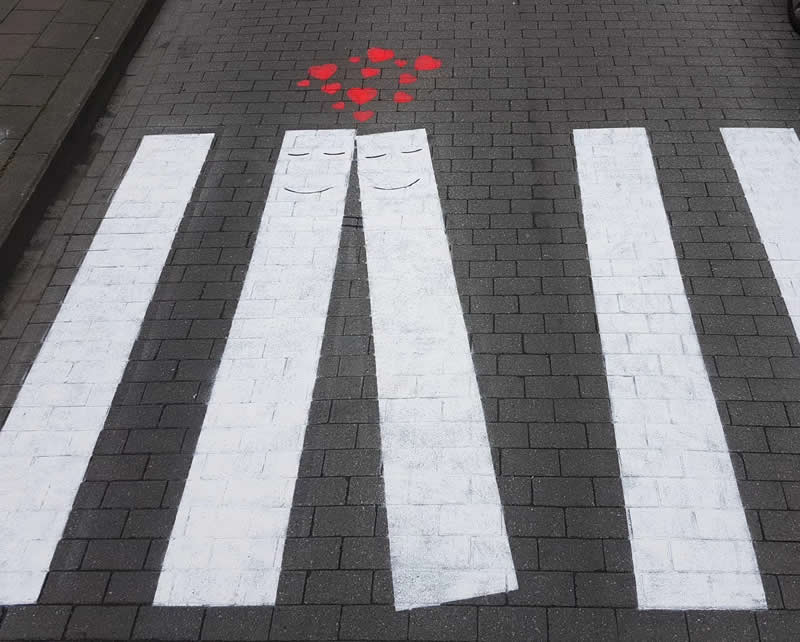
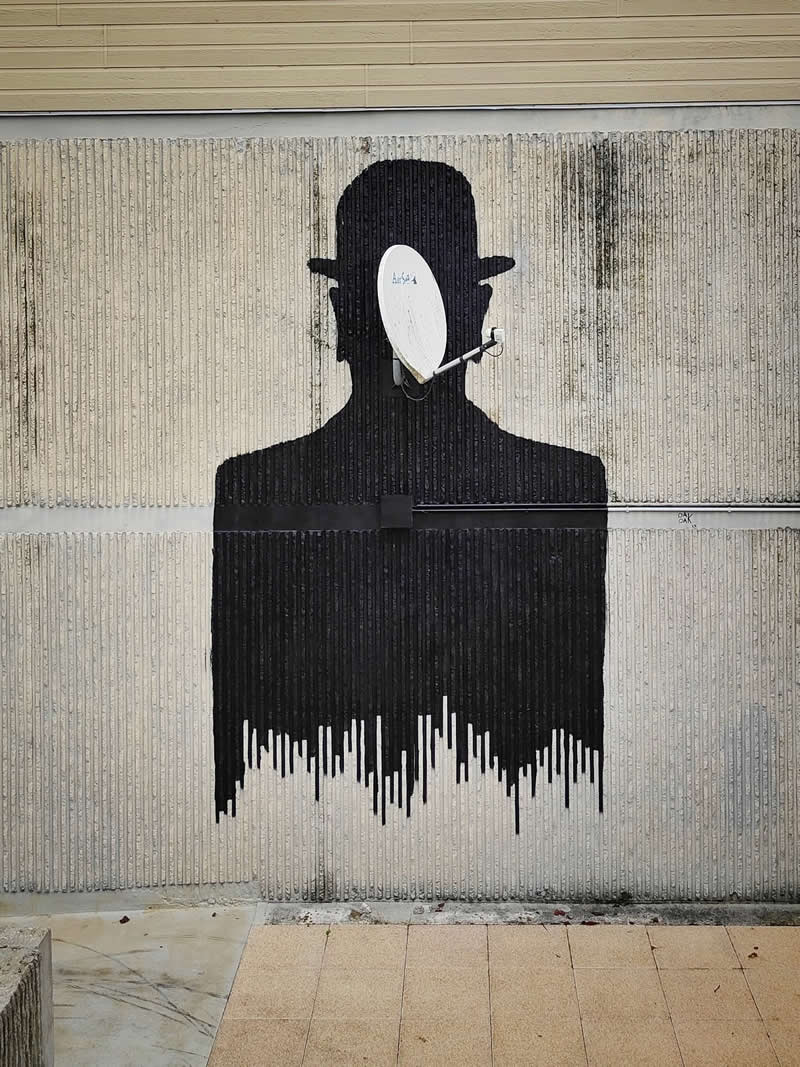
OakOak proves you don’t need big walls to make a big impact. His work is clean, sharp, and straight-up clever. No over-the-top details, just the right idea, placed perfectly.
That minimal approach forces you to engage. You have to pause, process, and connect the dots. And when it clicks, it really clicks. It’s like getting an inside joke that the city just told you.
In a world full of loud visuals, his quiet style stands out. It’s refreshing. It’s smart. And it sticks in your head way longer than something flashy ever could.
Sometimes less isn’t just more, it’s everything. And OakOak plays that game like a pro.
#11
#12
#13
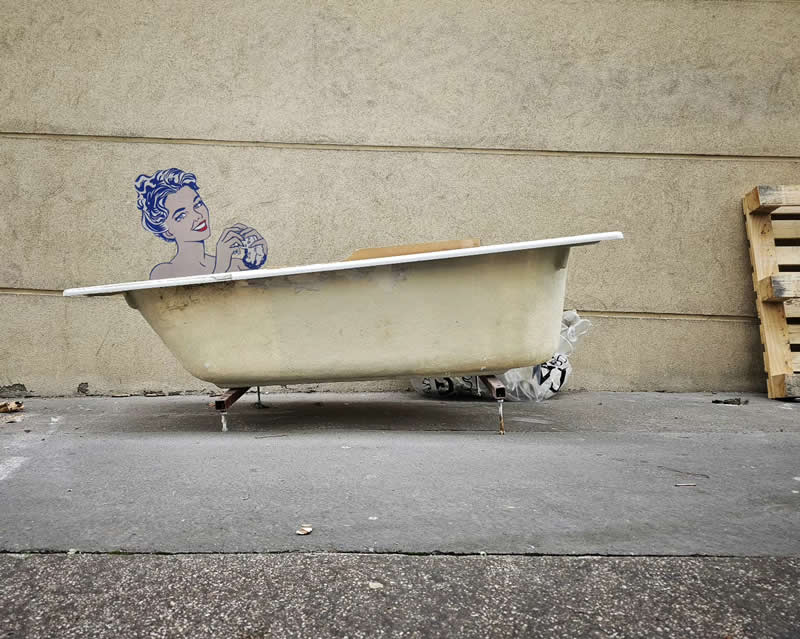
#14
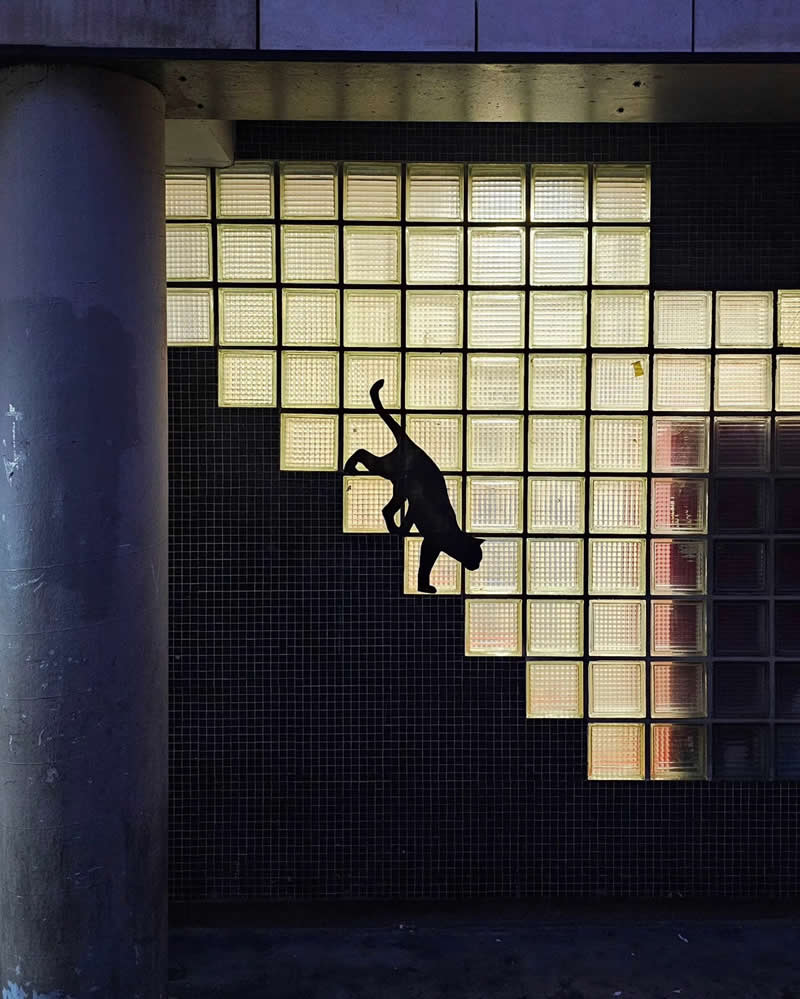
#15
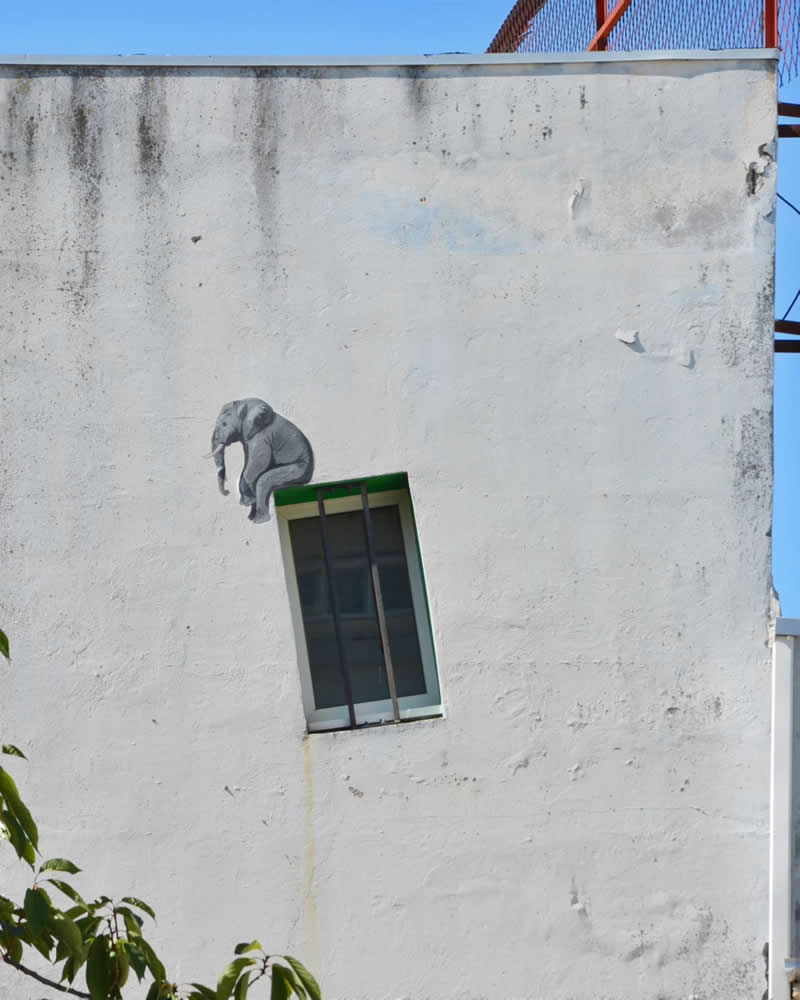
Comic Energy Meets Real Streets
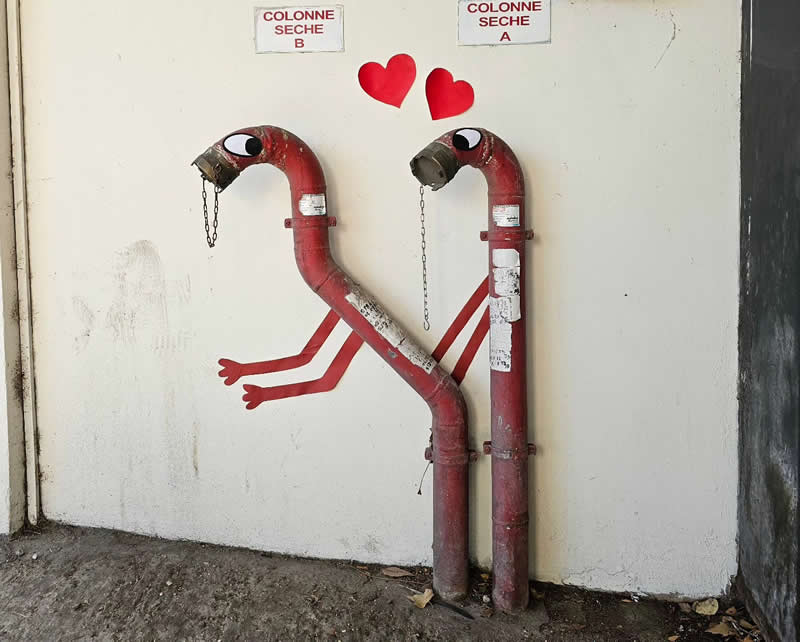
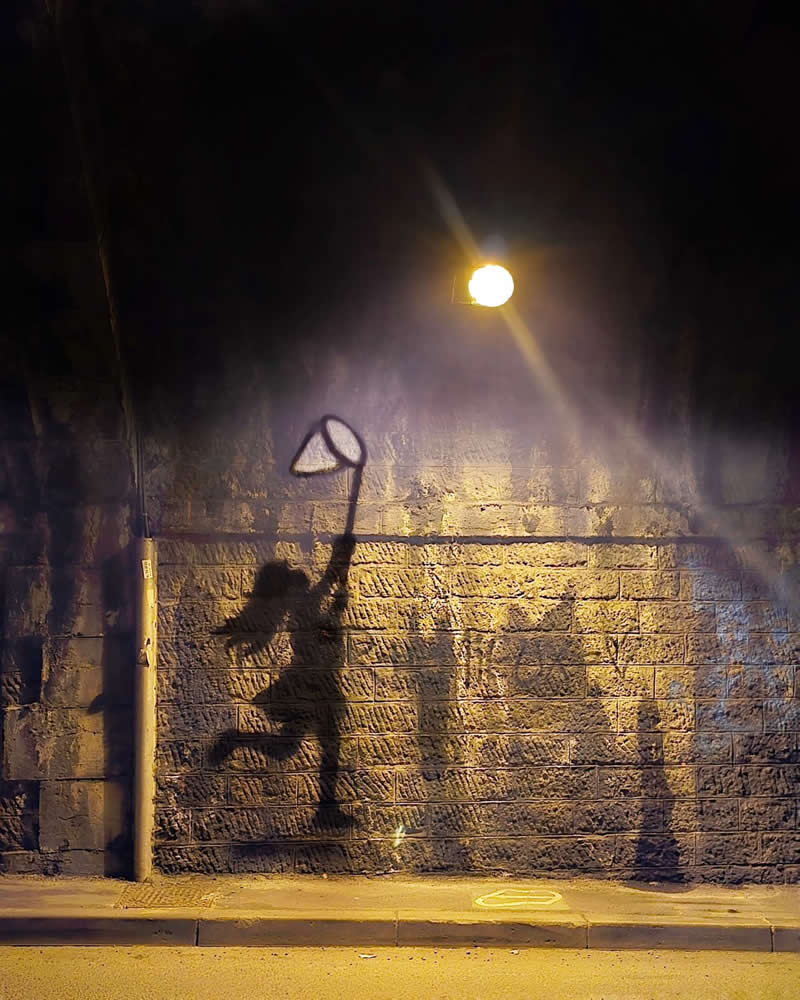
There’s a strong comic-book vibe running through OakOak’s work. You can feel the influence in the characters, the humor, and the timing. It’s playful, almost mischievous, like the city decided to have fun.
From subtle cartoon references to full-on visual jokes, his art feels alive. It breaks that serious, gritty street art stereotype and replaces it with something lighter but still meaningful.
It’s accessible, too. You don’t need context or explanation. You just see it, smile, and get it. But if you look deeper, there’s often a clever twist hiding underneath.
That balance between fun and thought is what makes his work addictive. It pulls you in without trying too hard.
#16
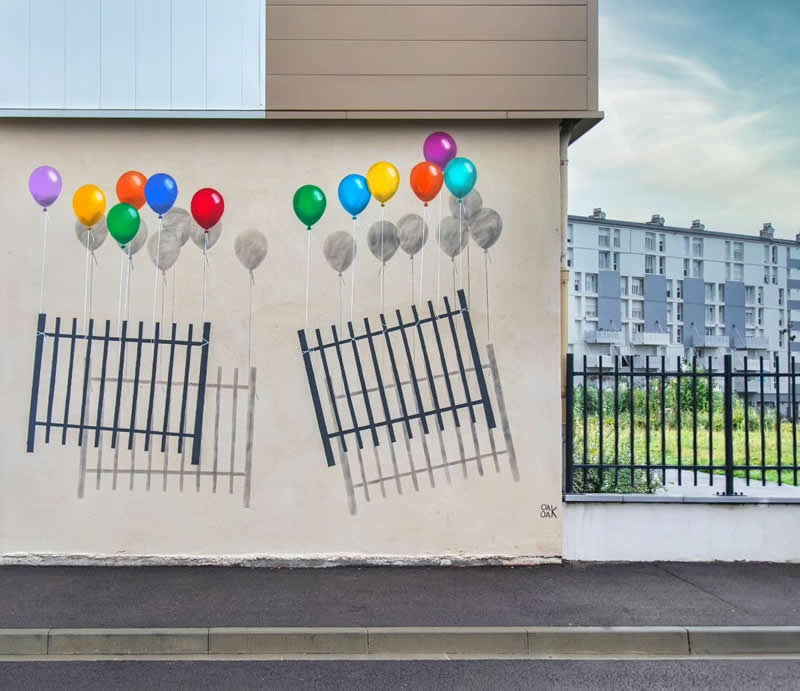
#17
#18
#19
#20
From Saint-Étienne Streets to Global Recognition
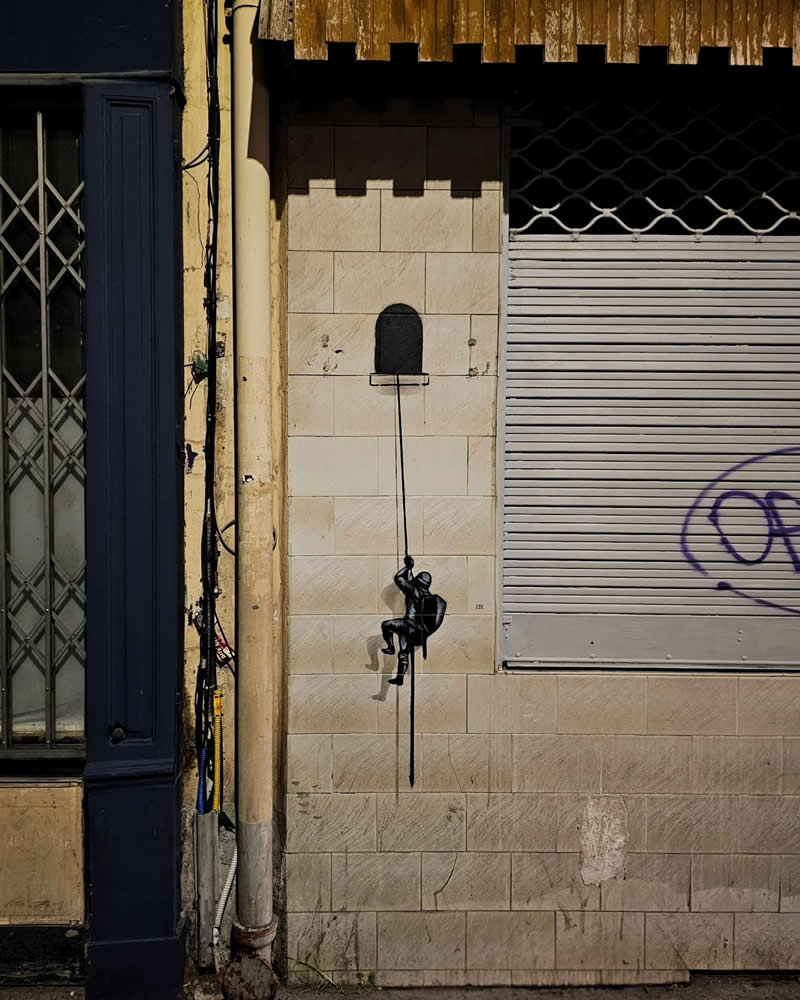
OakOak started local, just experimenting on the streets of Saint-Étienne. No hype, no big-stage debut, just consistency and creativity. But that authenticity? It traveled.
People started sharing his work online, and suddenly, those tiny street interventions were being seen worldwide. His style stood out because it felt real. Not polished, not commercial, just honest street-level imagination.
Even with global recognition, he never lost his roots. He still treats the street as his playground, not just a stepping stone. That connection keeps his work grounded and fresh.
It’s rare to see an artist grow without losing their edge, but OakOak managed to keep it intact.
#21
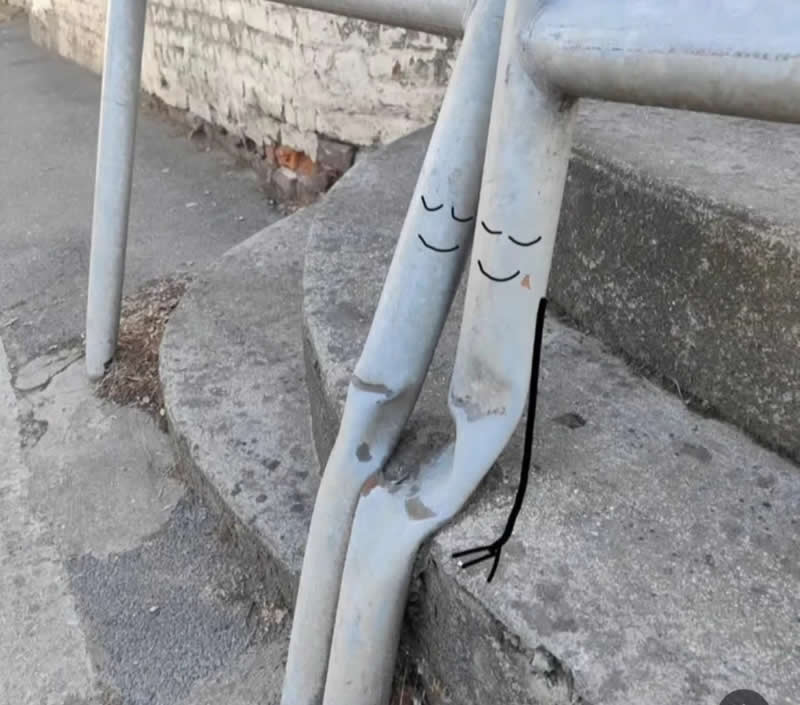
#22
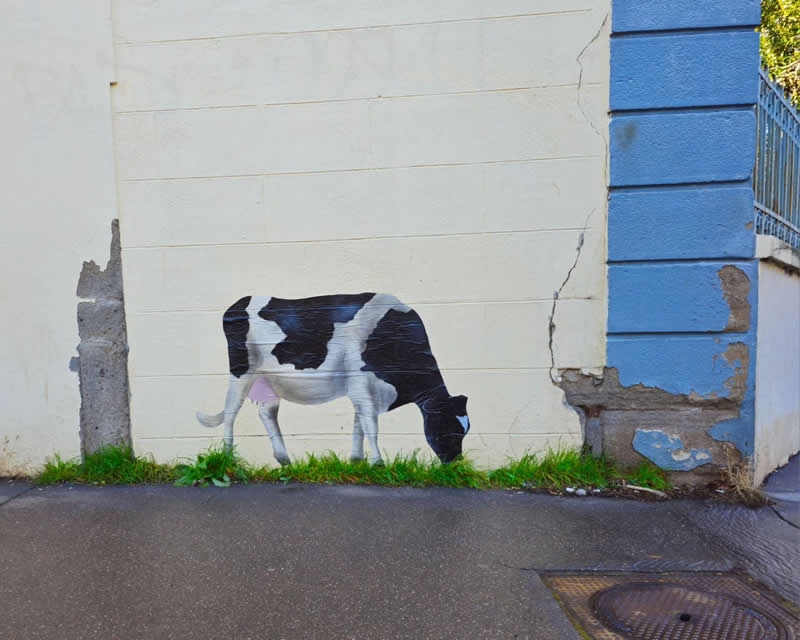
#23
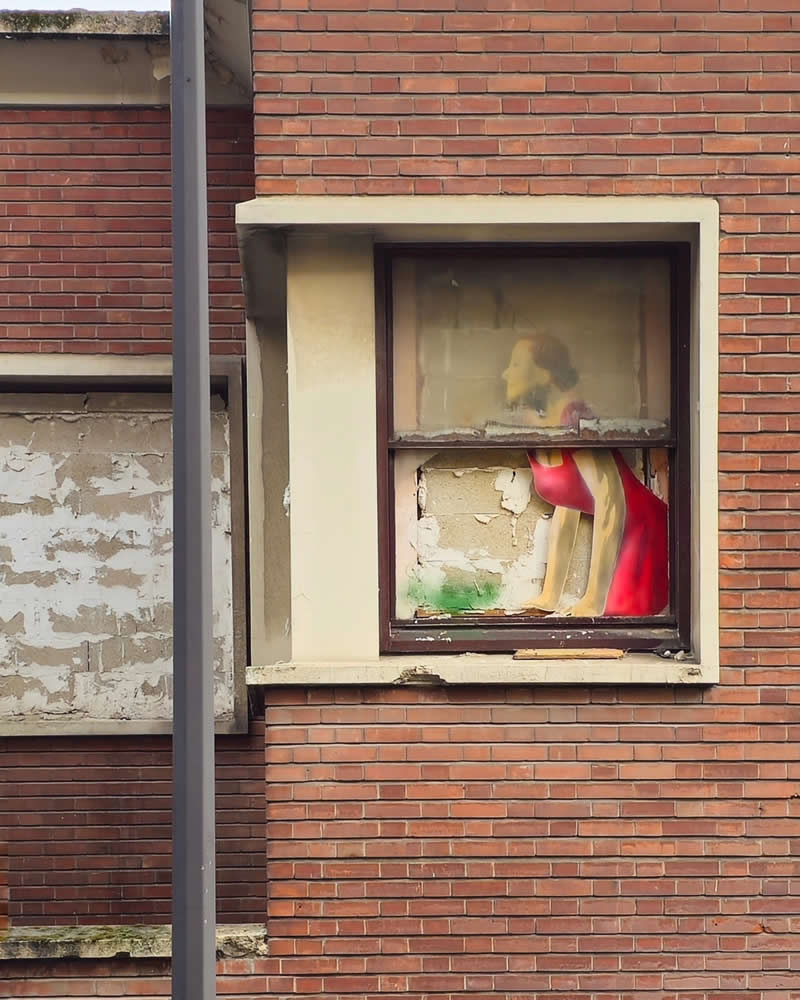
#24
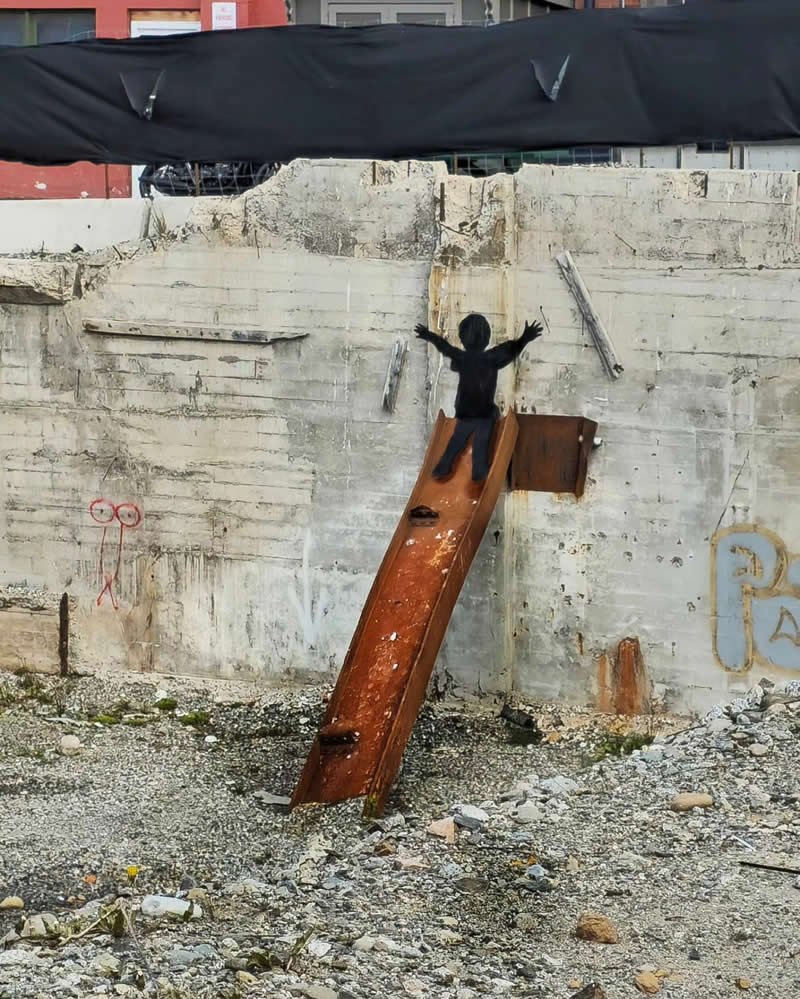
#25
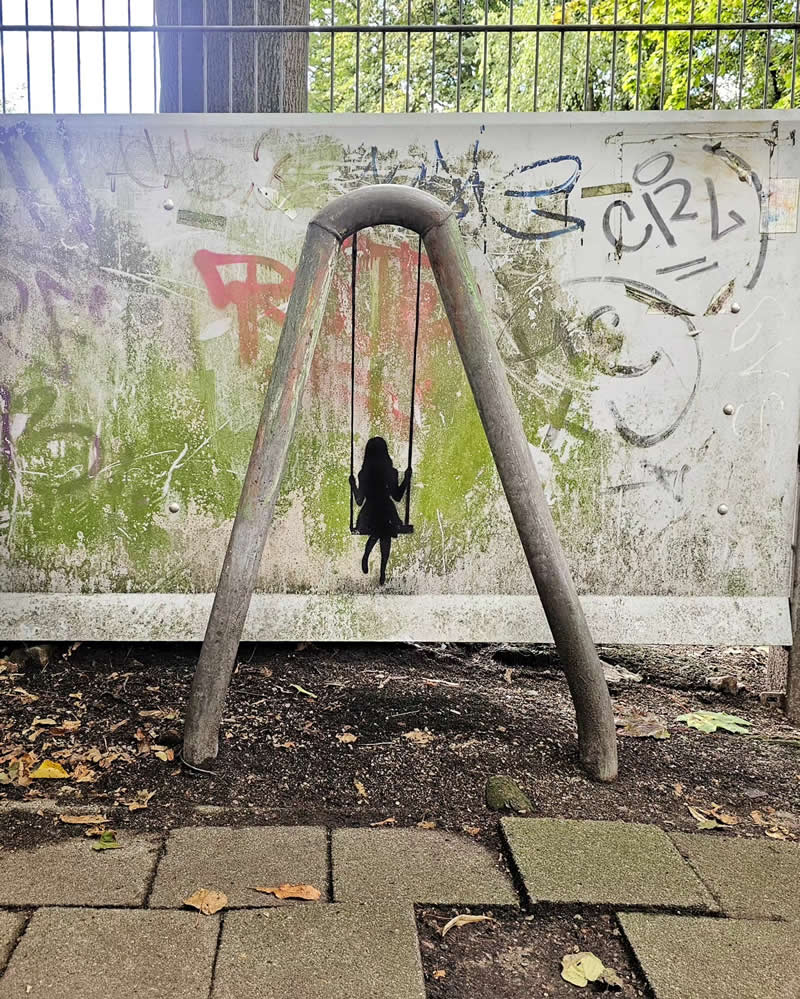
Changing the Way You See the City
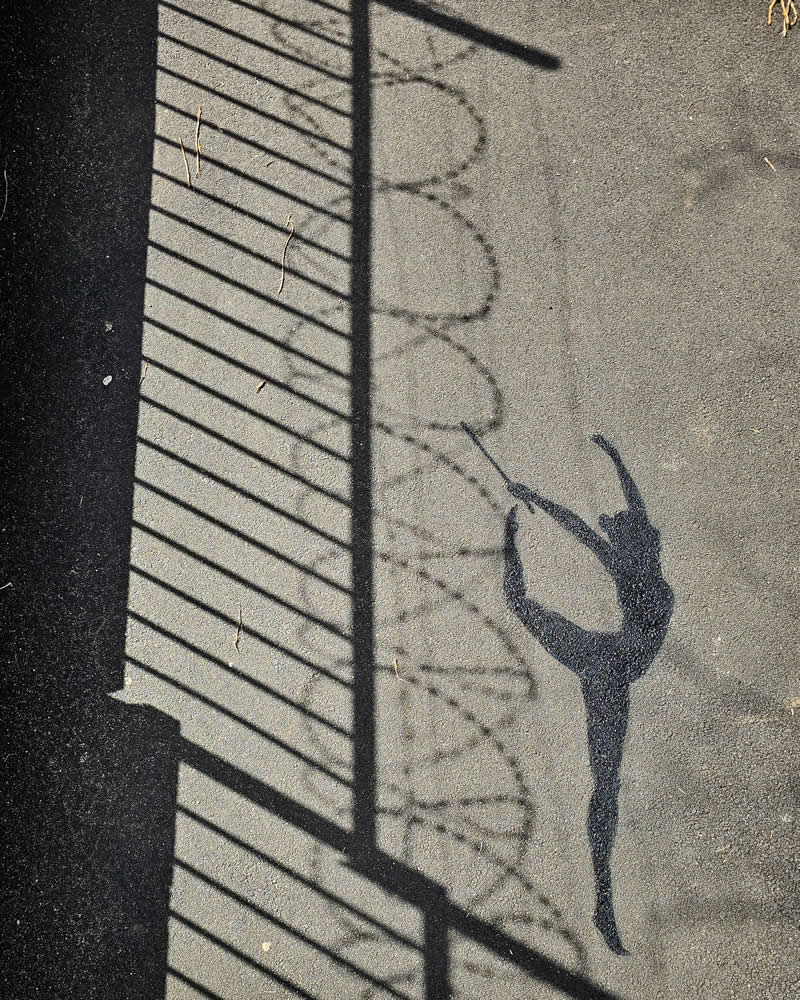
OakOak doesn’t just create art, he rewires how you see your surroundings. After noticing his work, it’s hard to look at a wall the same way again. Every crack starts to feel like potential.
He trains your eyes to slow down and pay attention. To find beauty in weird places. To see humor in flaws. It’s like flipping a switch in your brain.
And that’s powerful. Because his art doesn’t stay in one location, it follows you. It changes how you experience every street, every corner, every overlooked detail.
That’s the real impact. Not just creating moments but creating awareness. A reminder that creativity is everywhere, if you’re willing to notice it.
#26
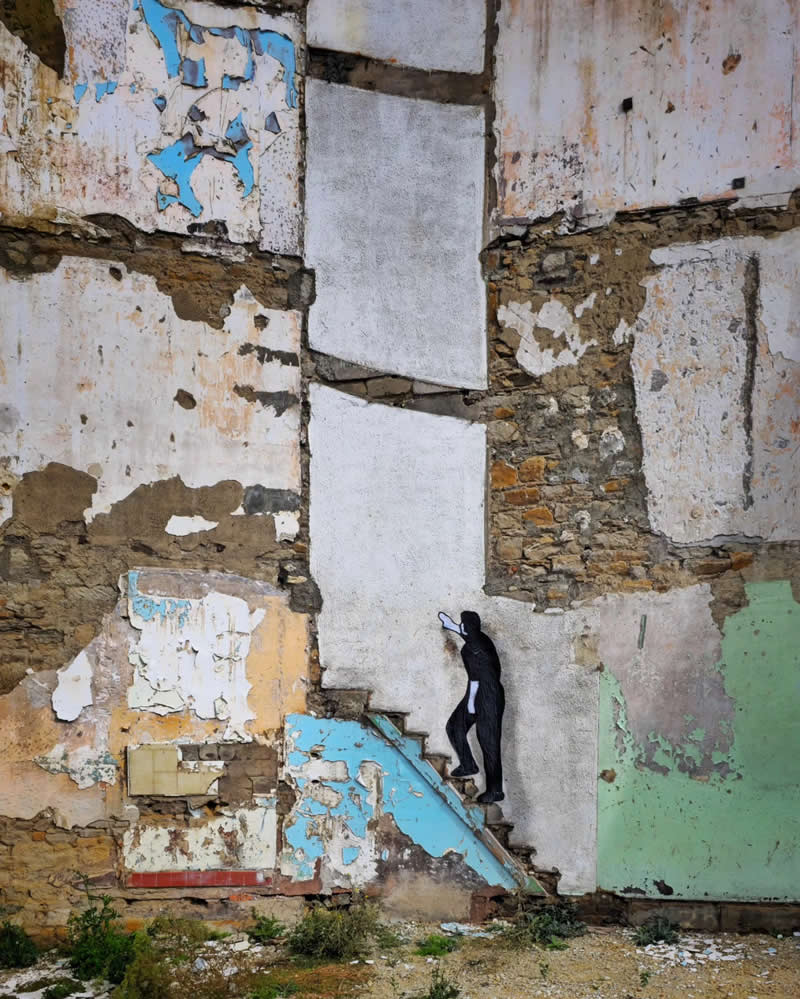
#27
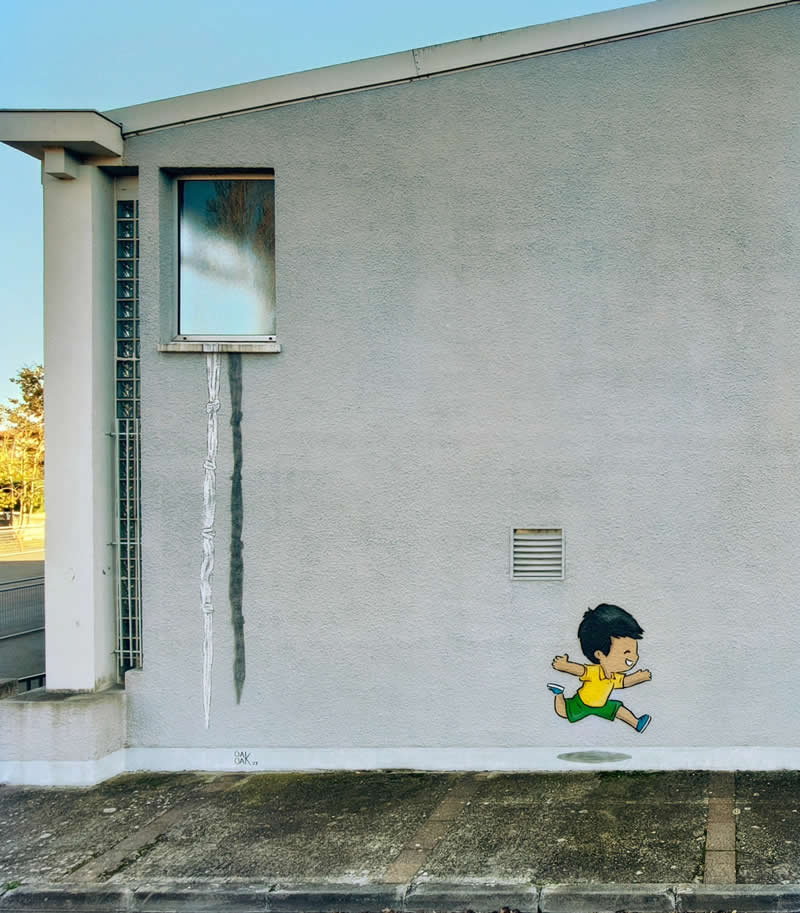
#28
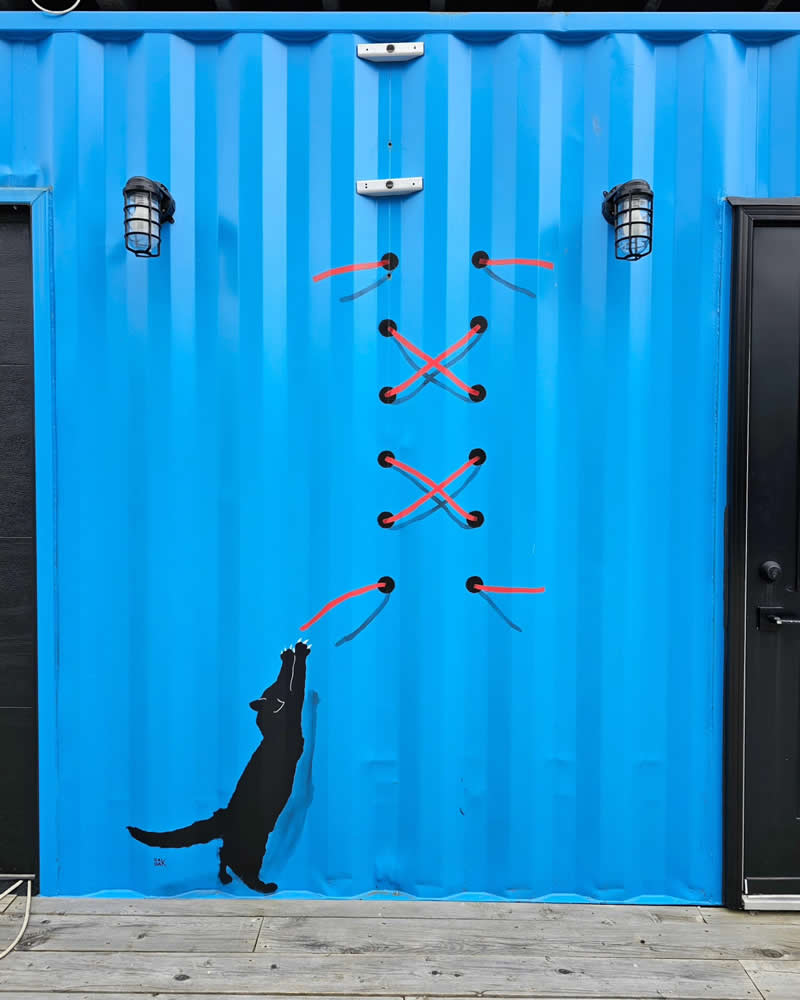
#29
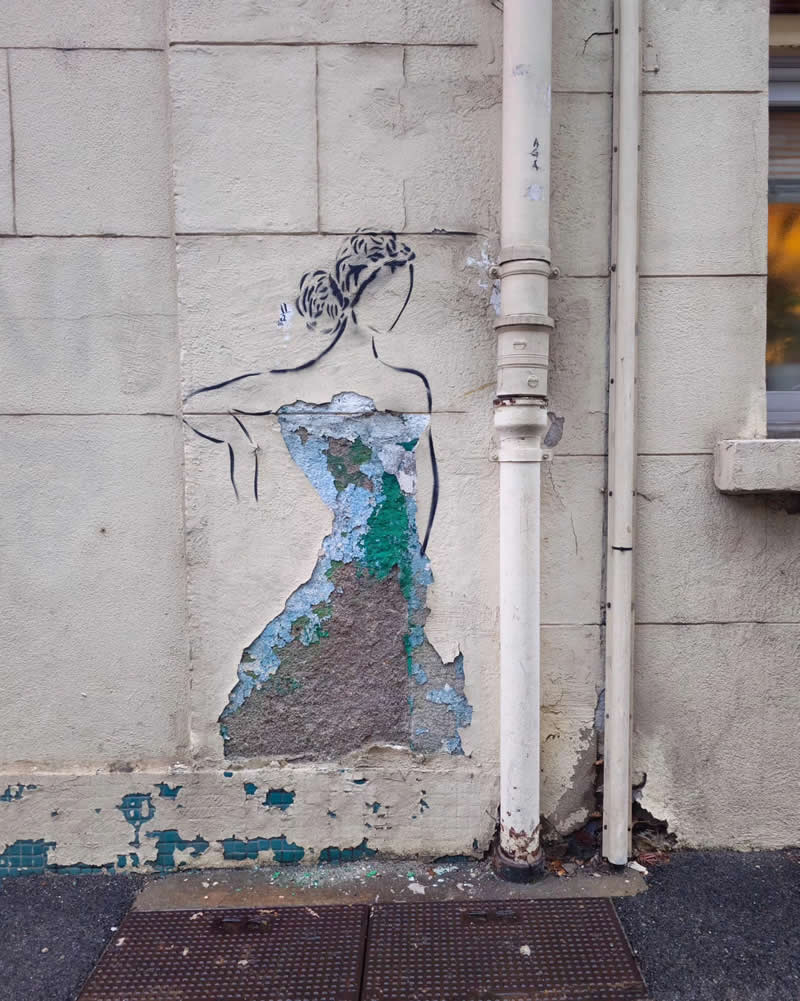
#30
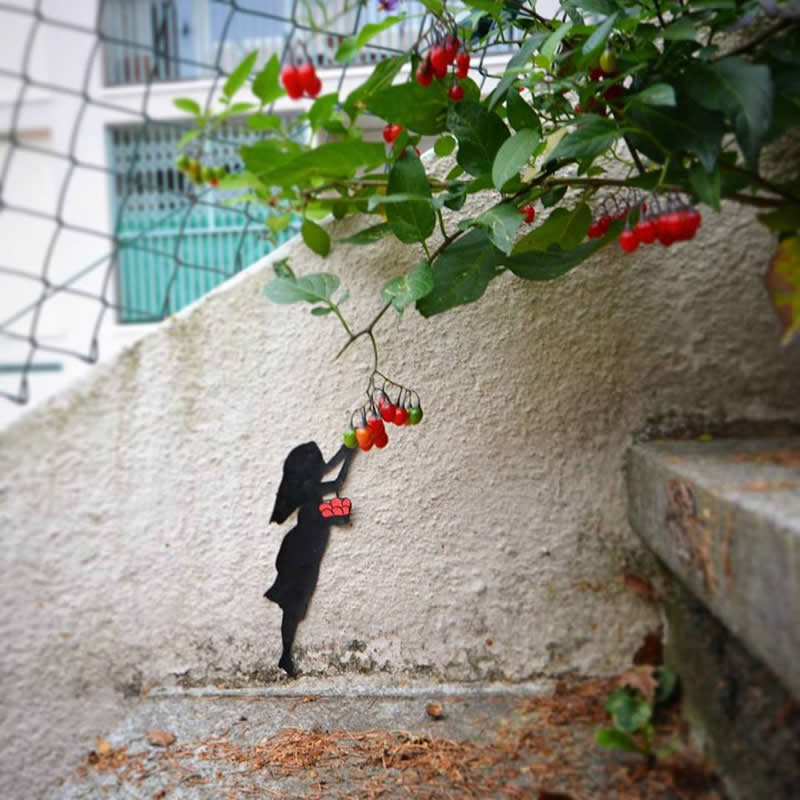
#31
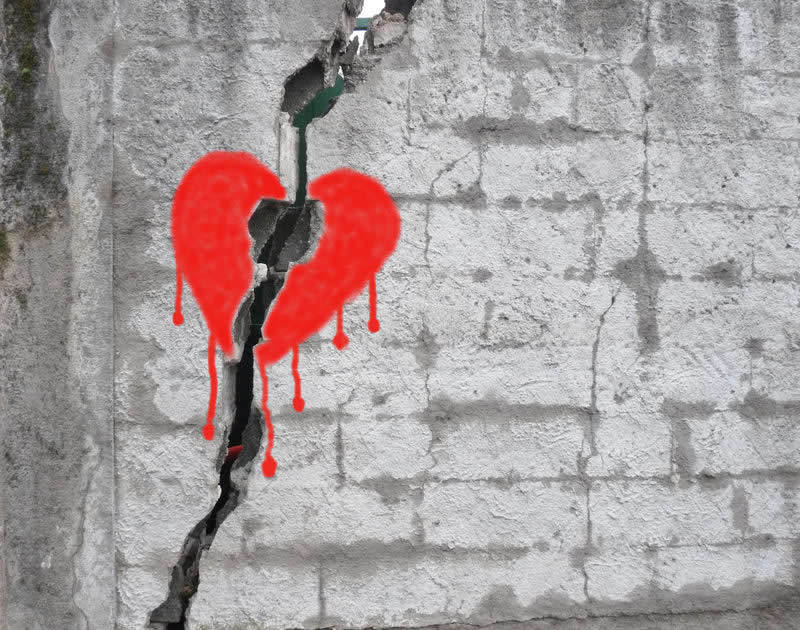
#32
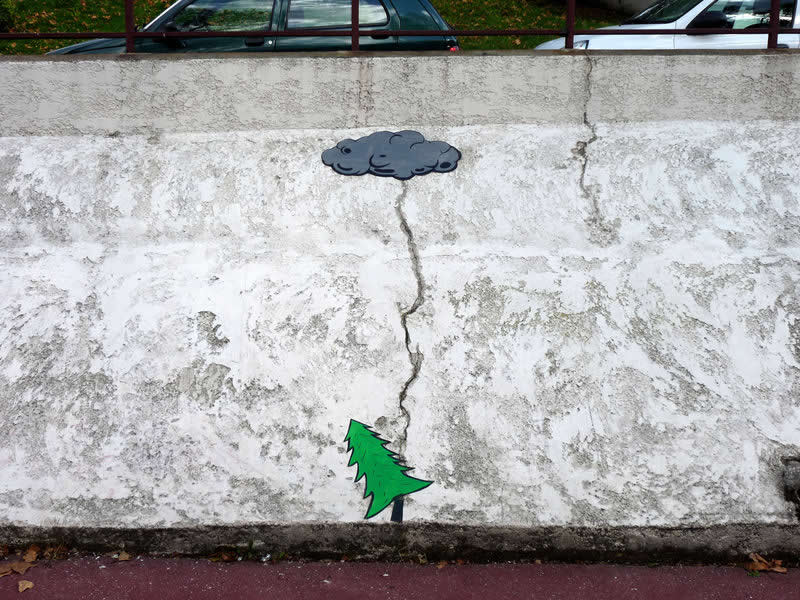
#33
FAQs:
Who is OakOak, and why is he famous?
OakOak is a French street artist known for transforming urban imperfections into creative artworks. His clever, minimal style and playful use of cracks, walls, and objects have gained him global recognition in the street art scene.
What makes OakOak’s street art unique?
His art stands out for its direct interaction with urban elements. Instead of creating large murals, he uses existing cracks and objects to form witty, thought-provoking visuals that feel natural, surprising, and deeply connected to the environment.
Where does OakOak create his street art?
OakOak is based in Saint-Étienne, France, where he began his work. However, his art has expanded internationally, appearing in various cities while still maintaining a strong connection to urban environments and street culture.
What inspires OakOak’s artistic style?
He draws inspiration from comic books, cartoons, and everyday urban life. His work reflects a playful imagination combined with sharp observation, turning overlooked details into creative expressions filled with humor and subtle meaning.
What message does OakOak’s street art convey?
OakOak encourages people to see beauty in imperfections and creativity in overlooked places. His work invites viewers to slow down, observe their surroundings, and appreciate how even small details can hold artistic and emotional value.