There’s something unreal about staring into the Milky Way. It humbles you real quick. And every year, Capture the Atlas drops a collection that straight-up blows minds. The 2026 Milky Way Photographer of the Year is no joke. Now in its ninth year, the competition pulled in over 6,500 submissions from photographers across 15 nationalities, yeah, that’s global talent at its finest.
This year’s 25 winning images take you on a wild ride across 12 countries, from the deserts of Chile to the coastlines of New Zealand, and even the remote skies of Botswana. Each shot feels like a moment stolen from the universe, raw, quiet, and insanely beautiful. But don’t get it twisted, these aren’t lucky snaps. Every image is built on patience, planning, and great technical skill.
What really hits is the vibe behind these photos. They remind you to slow down, look up, and reconnect with something bigger than your daily grind. In a world where light pollution is slowly killing our night skies, this collection feels like both a celebration and a wake-up call.
At the end of the day, every one of these photos started the same way: someone looked up… and didn’t look away.
You can find more info:
1. « My Perfect Night » by Daniel Viñé Garcia
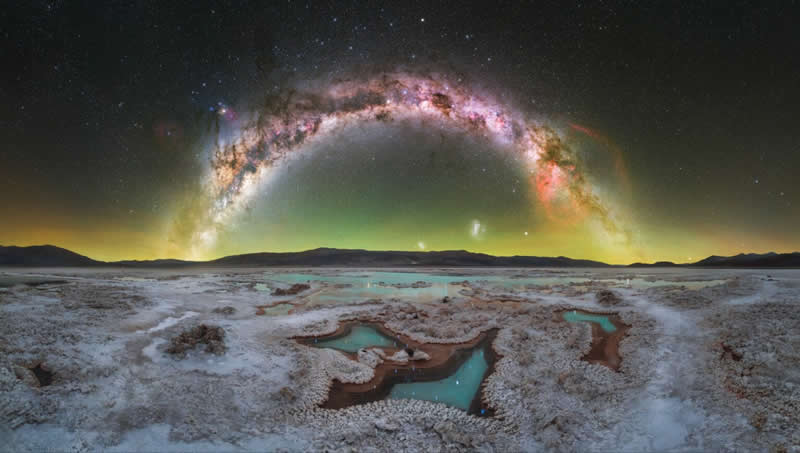
Catamarca, Argentina – Reaching this location required traveling deep into the Argentine Puna, a remote region accessible only by 4×4 vehicles along rough dirt tracks, far from any source of light pollution. The nearest settlement was Antofalla, a small village of around 60 inhabitants, where electricity is generated locally and turned off at night. Beyond that, the closest towns are several hours away, surrounded by vast and isolated landscapes. Situated between 3,500 and 4,000 meters above sea level, the altitude and remoteness make this an exceptional environment for night sky photography.
2. « The Milky Way Over a Field of Lupines » by Alvin Wu
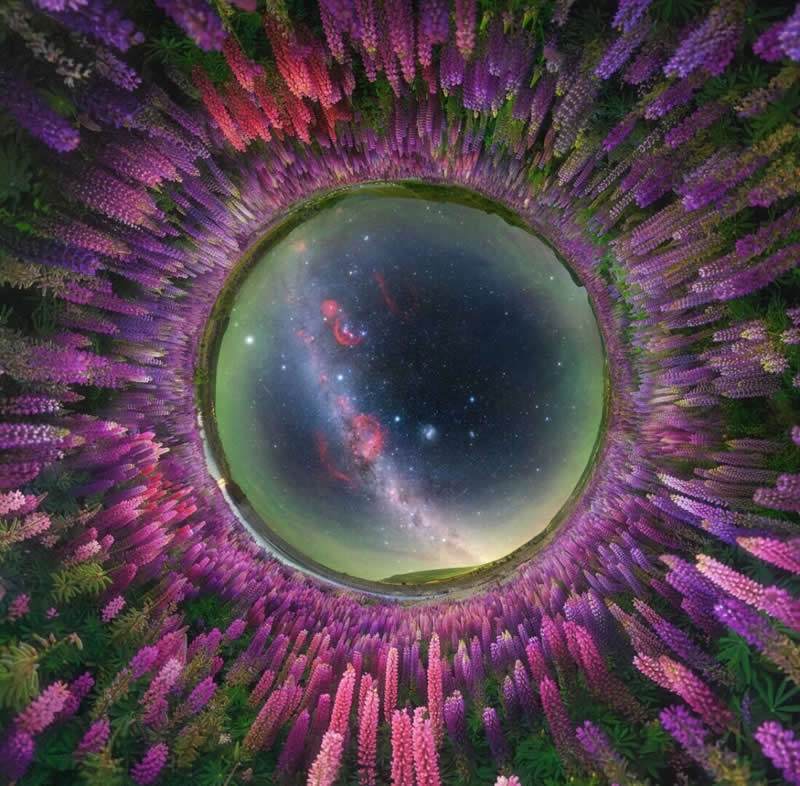
Twizel, New Zealand – This image captures the Milky Way rising above a blooming field of lupines in New Zealand during November, when spring wildflowers transform the landscape beneath the night sky. Using a fisheye perspective, the flowers encircle the scene, forming a natural frame that draws the viewer into the celestial sphere above.
3. « Geminid Symphony Over La Palma’s Guardian of the Sky » by Uroš Fink
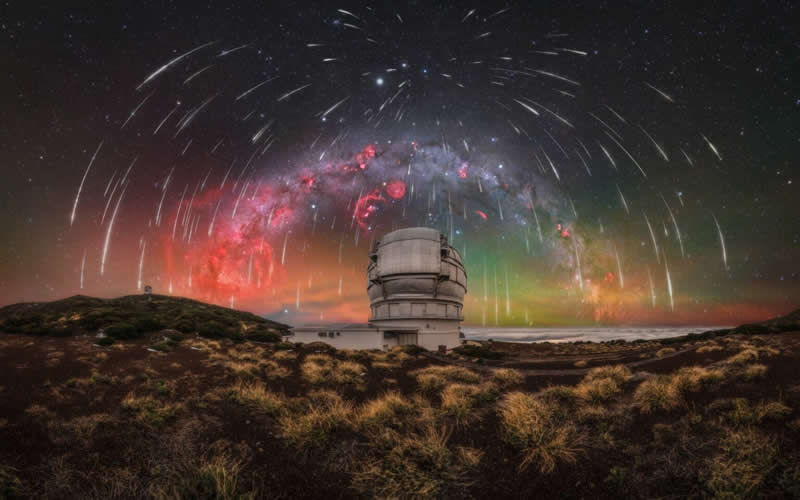
Roque de los Muchachos GTC Telescope, La Palma – This winter Milky Way panorama captures a sky filled with Geminid meteors above the Gran Telescopio Canarias, the largest optical telescope in the world.
4. « Aoraki Mt Cook » by Owain Scullion
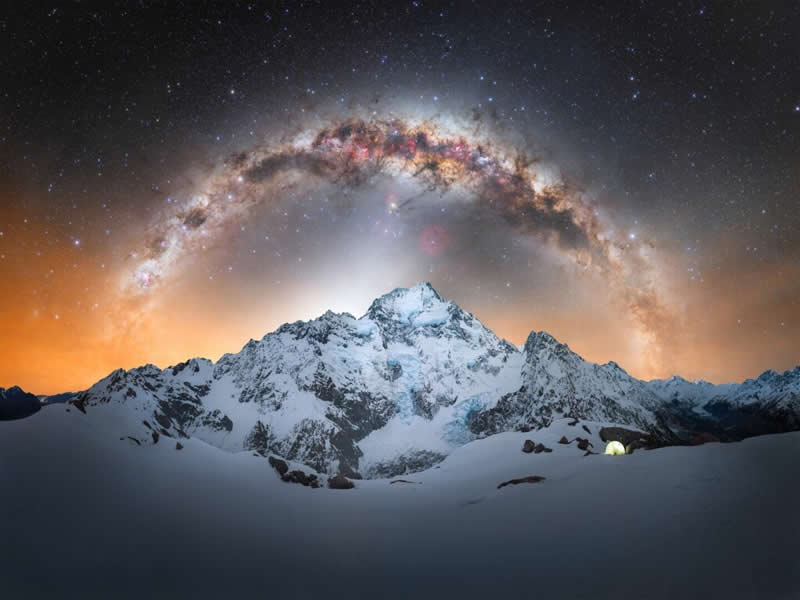
Aoraki/Mt Cook National Park, New Zealand – My goal with astrophotography has always been to combine my passion for mountains, adventure, and the landscapes of New Zealand. Capturing the Milky Way arch above Aoraki / Mount Cook, the central peak of the national park, became one of the most demanding challenges I had set for myself.
5. « Galactic Gandalf » by Evan McKay
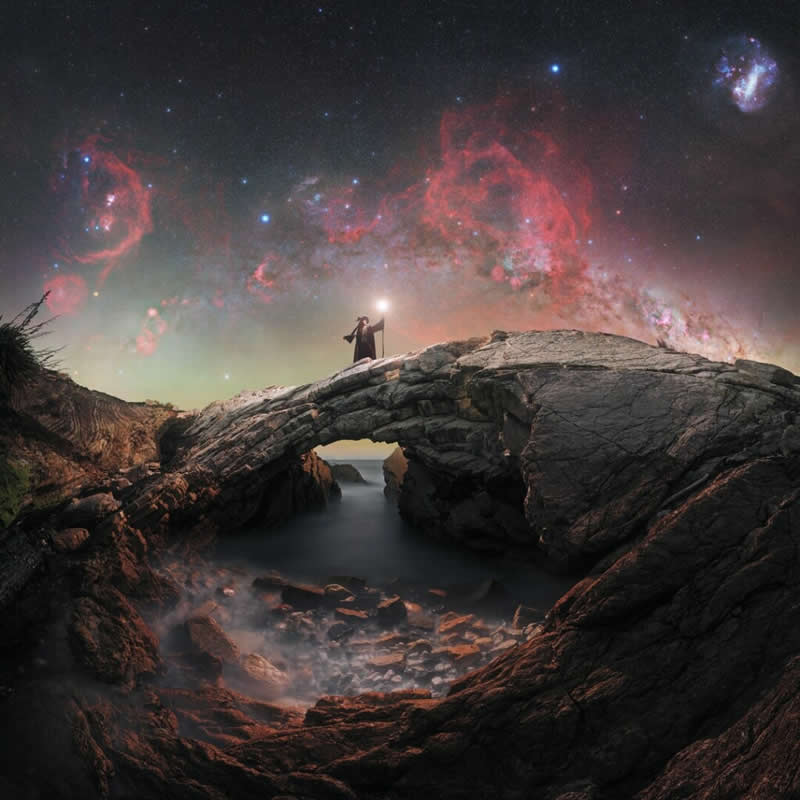
Wairarapa Coast, New Zealand – When I first discovered this location, I immediately envisioned creating something special beneath the night sky. However, upon arriving after dark, I found that a seal had settled exactly where I had planned to set up my tripod. It showed little interest in moving, and judging by how worn and polished the rock was, it was clearly one of its preferred resting spots.
6. « Sodium Milky Way » by Julien Looten
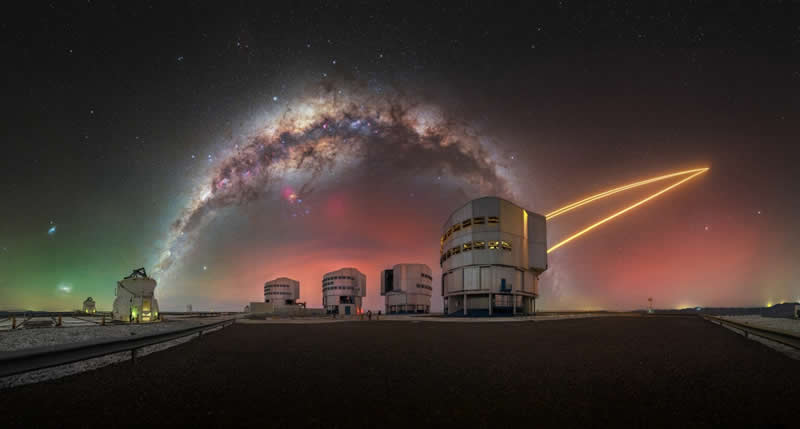
Very Large Telescope, Paranal, Chile – This scene was captured at the Very Large Telescope (VLT) on Cerro Paranal, in Chile’s Atacama Desert, under exceptionally pure observing conditions where the boundary between Earth and sky feels almost seamless.
7. « Celestial Light Over Sea Cliffs » by Anthony Lopez
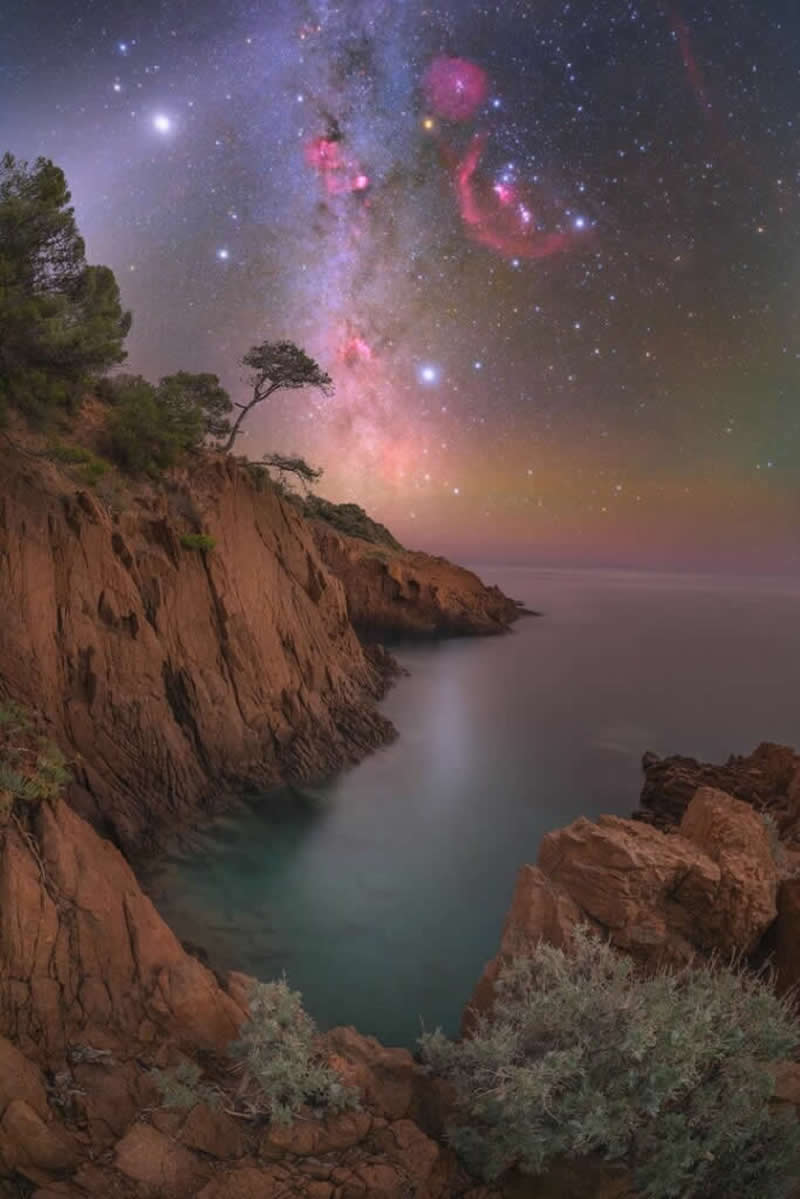
Saint Raphaël, French Riviera – The night sky takes on a distinctly different character during this time of year, especially with the arrival of the winter constellations. The tones feel cooler, the air sharper, and Orion rises prominently above the horizon, becoming the centerpiece of the scene. It’s a season that brings a quiet, almost meditative atmosphere to nightscape photography.
8. « Night at the Remarkables » by Tom Rae
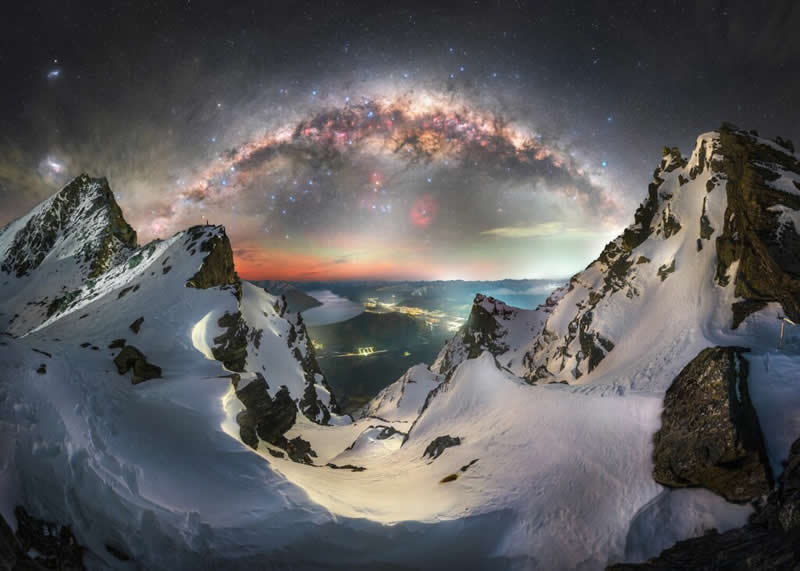
Remarkables, Queenstown, New Zealand – The winter Milky Way arch sets above the rugged Remarkables Range in the Southern Alps, while the lights of Queenstown, New Zealand, glow far below. It is a rare alignment of galaxy, alpine terrain, and human presence, all captured in a single moment.
9. « Firewater » by Baillie Farley
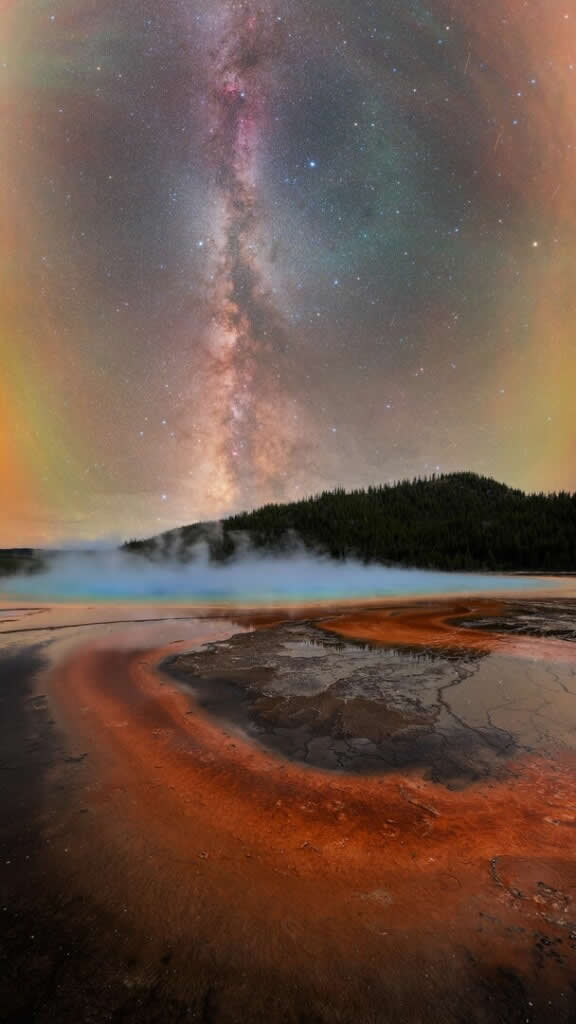
Grand Prismatic Spring, Yellowstone National Park, USA – Framed by the vibrant colors and drifting steam of Grand Prismatic Spring, the Milky Way rises above one of the most unique geothermal landscapes on Earth. It is a rare moment where the raw energy of the planet meets the quiet vastness of the night sky.
10. « Lost in the Ripples of Space and Time » by Leonel Padrón
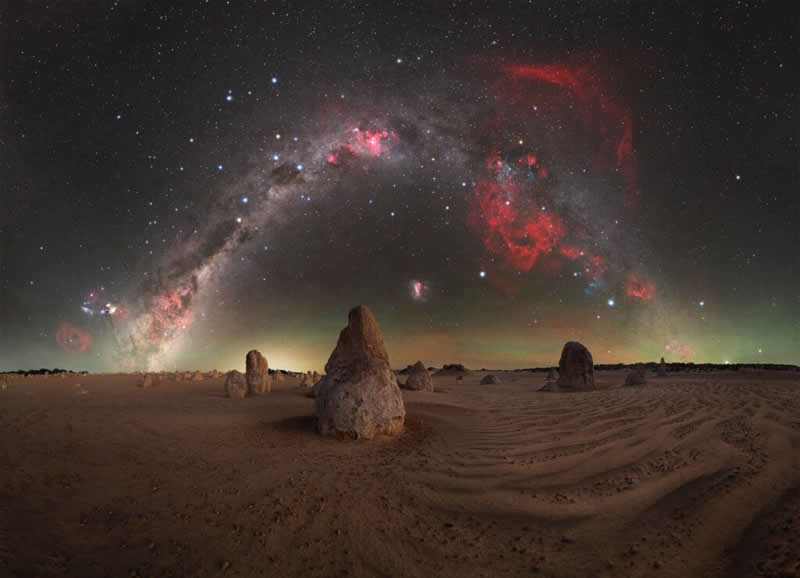
Pinnacles Desert, Nambung, Western Australia – There’s something uniquely powerful about a calm, windless night in the Pinnacles Desert, a place that never fails to remind me how fortunate we are to have such pristine dark skies so close to home, just a short drive away. As the sun sets beyond the Indian Ocean, a profound stillness settles over Nambung, transforming the landscape into an almost otherworldly scene and drawing me back here time and time again.
11. « Perseid Meteors Over Durdle Door » by Josh Dury
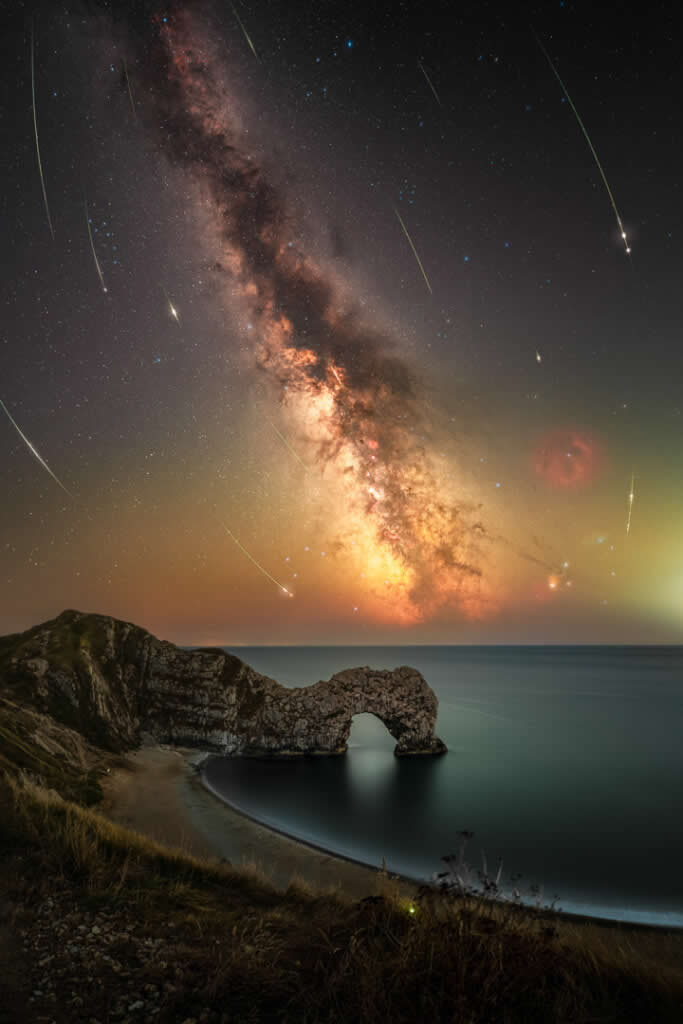
Durdle Door, Jurassic Coast, Dorset, England – “Ancient fireworks” from Comet Swift-Tuttle hurtled through the atmosphere to document this ultra-wide angle composite image above the natural limestone arch of Durdle Door. In the foreground, a singular glow worm was documented amongst reeds along the sea cliff edge.
12. « Galaxy on the Rise » by Anastasia Gulova
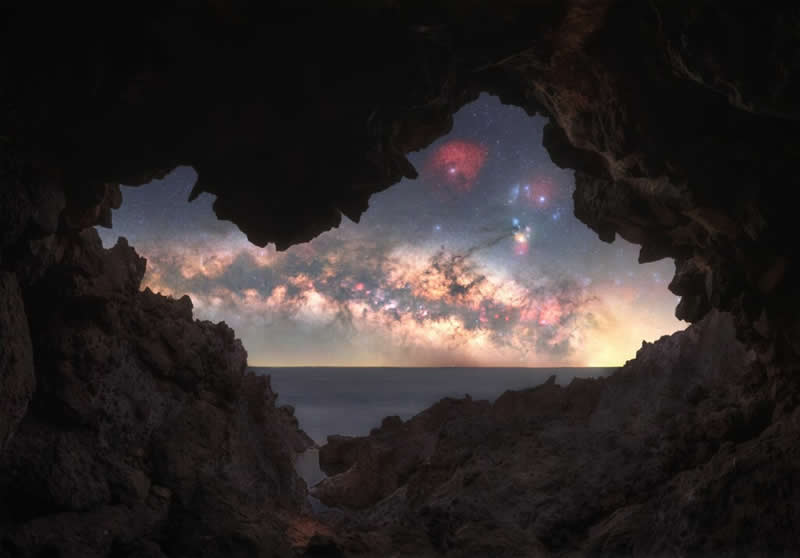
Tenerife, Canary Islands, Spain – I’m always drawn to locations that feel unique and relatively undiscovered, and this cave was a perfect example. Although it was only a few minutes from the parking area, it took me nearly four hours of scouting to finally locate it.
13. « Divinity » by Kavan Chay
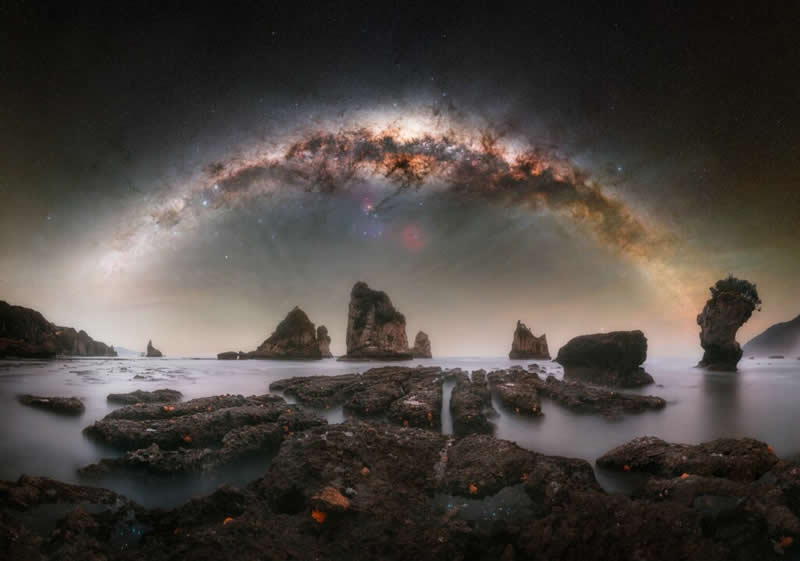
West Coast, New Zealand – Capturing a setting Milky Way core from this beach had been on my list for a long time, with the starfish-covered reef offering a distinctive and compelling foreground.
14. « Milky Way Over the Tatra Mountains » by Łukasz Remkowicz
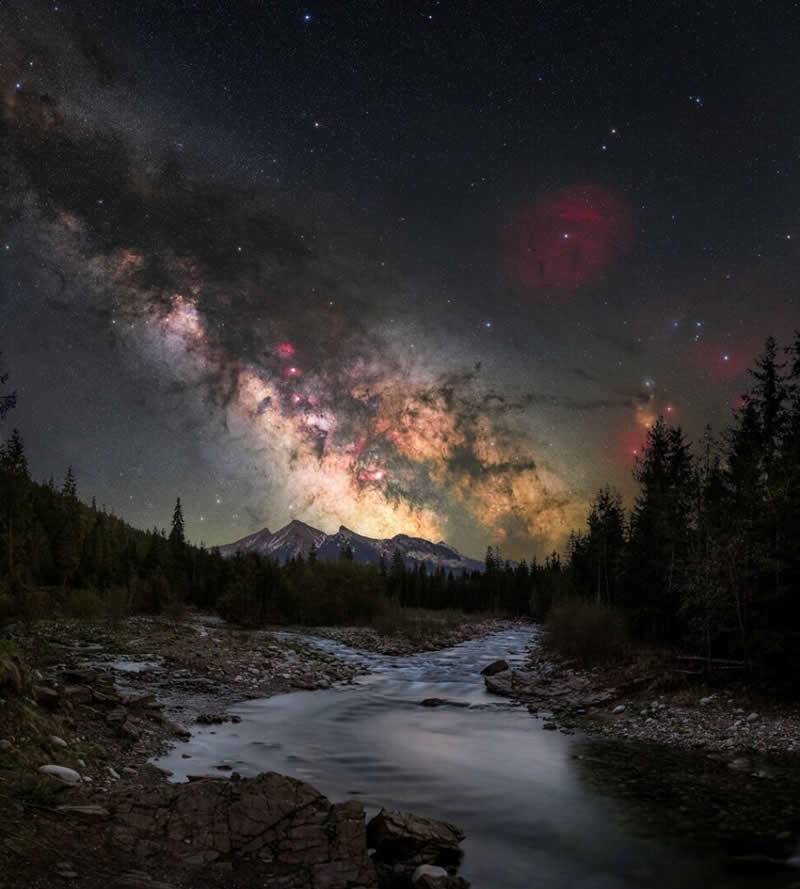
Jurgów, Poland – Taking advantage of the April new moon, I set out to capture my first Milky Way image of 2025. With promising conditions forecast across southern Poland, I returned to the Tatra Mountains, a region I often revisit with my camera, this time exploring the Białka Gorge in Jurgów, a location I had not photographed before.
15. « Double Milky Way Over Monfragüe National Park » by Luis Cajete
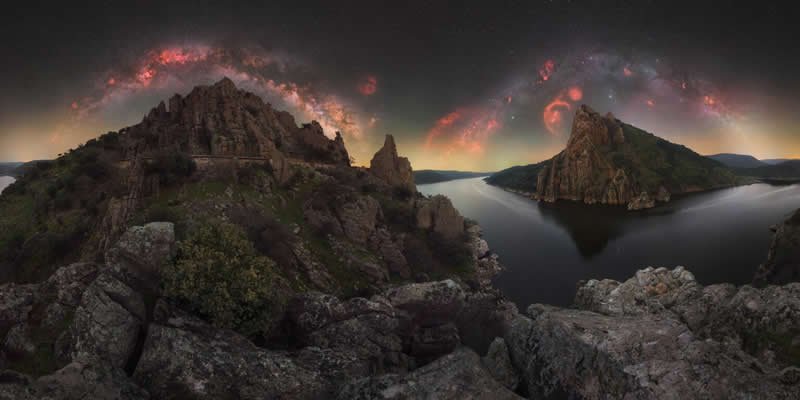
Monfragüe National Park, Spain – I am always drawn to traveling to remarkable natural landscapes to capture their essence through night photography. This image, which represented a significant challenge for me, was taken in Monfragüe National Park during one of the few nights of the year when both the winter and summer Milky Way can be seen in the same sky.
16. « Salto de Agrio » by Alejandra Heis
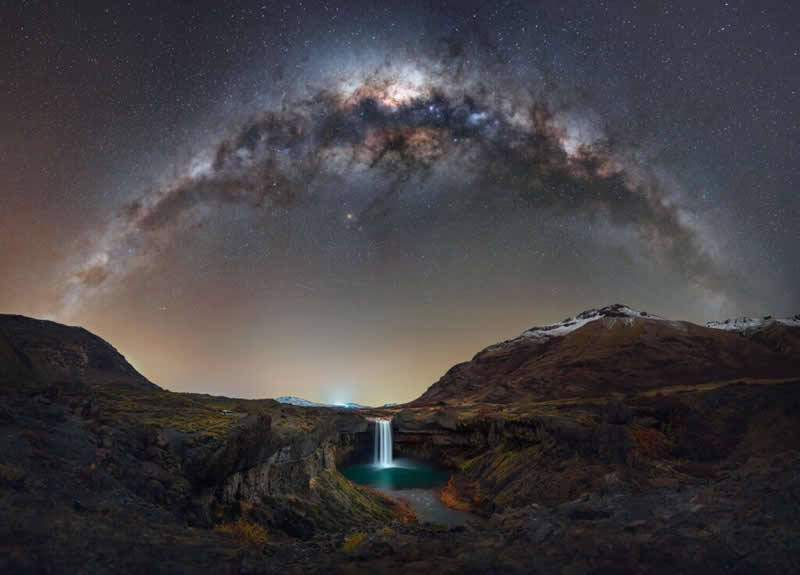
Salto del Agrio, Caviahue, provincia de Neuquén, Argentina – This image was captured during a night at Salto del Agrio, in the province of Neuquén, Argentina. It’s a place that invites reflection on the immense sequence of events, both on Earth and in the sky, that shaped this landscape. The 45-meter waterfall plunges into a canyon carved by ancient lava flows from the Copahue volcano. Surrounded by basalt, the scene is enriched by the vivid colors left behind by minerals, particularly iron and sulfur carried by the Agrio River.
17. « Galactic Spine » by Andrew Imhoff
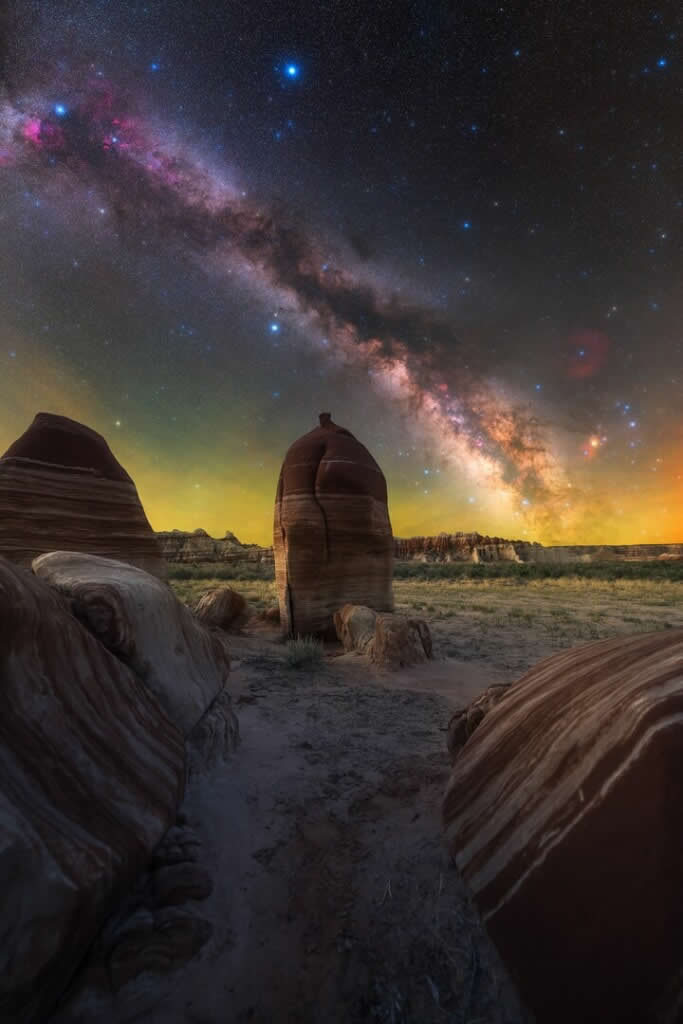
Hopi Reservation, Northern Arizona, USA – I am drawn to Milky Way photography because of its ability to spark curiosity. It offers a perspective that feels entirely different from other forms of photography, often revealing a world that many people have never experienced.
18. « Valle de la Luna, Universo Triasico Ischigualasto » by Gonzalo Javier Santile
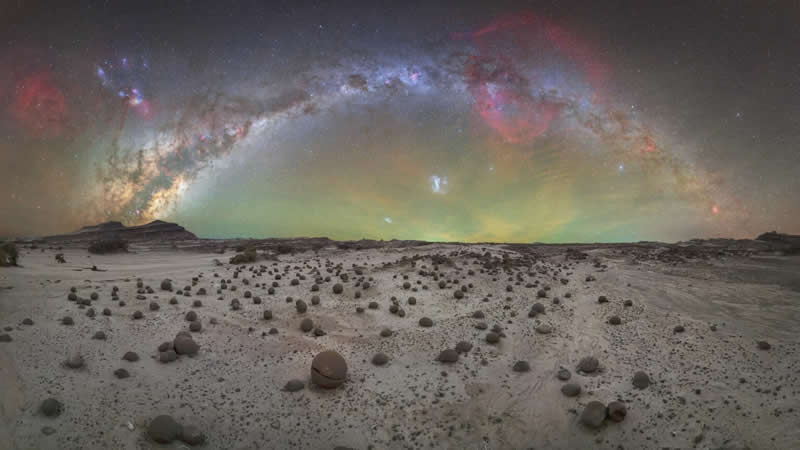
Parque Provincial Ischigualasto, Valle de la Luna, San Juan Argentina – This photograph captures the first full Milky Way arch ever taken at this location, a site of exceptional scientific and cultural significance. Recognized as a UNESCO World Heritage Site, its geological importance lies in being the only place on Earth where the complete sequence of the Triassic Period can be observed, preserving key fossils from the earliest dinosaurs and earning its place among the most valuable geological heritage sites in the world.
19. « Fireball in Paradise » by Jason Rice
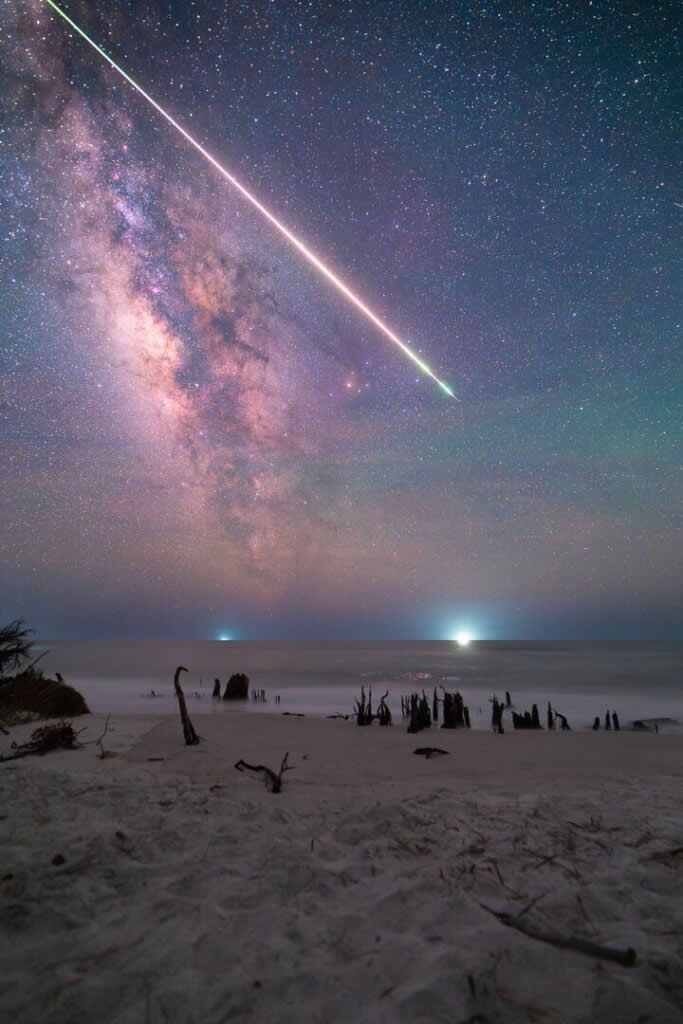
Cape San Blas, Florida, USA – This single-exposure image became a reminder to always expect the unexpected in astrophotography. I had not even planned to visit this beach, as the forecast called for clouds and rain throughout the night.
20. « Caldera Galaxy Panorama » by Max Terwindt
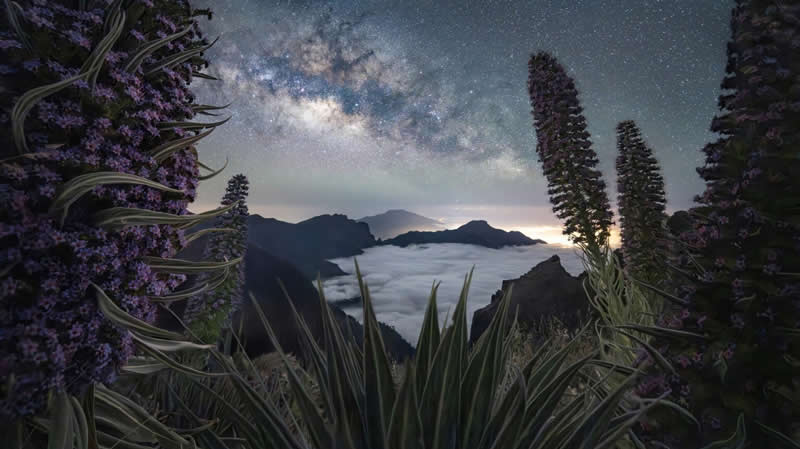
La Palma, Canary Islands – This panorama was captured at the highest point of the volcanic island of La Palma, a location defined by its unique terrain and exceptional night sky conditions. The lack of ambient light made the process more demanding, requiring extensive focus stacking to achieve sharpness across the entire scene, but it also provided ideal conditions for astrophotography.
21. « The Garden of Stars » by Luca Fornaciari
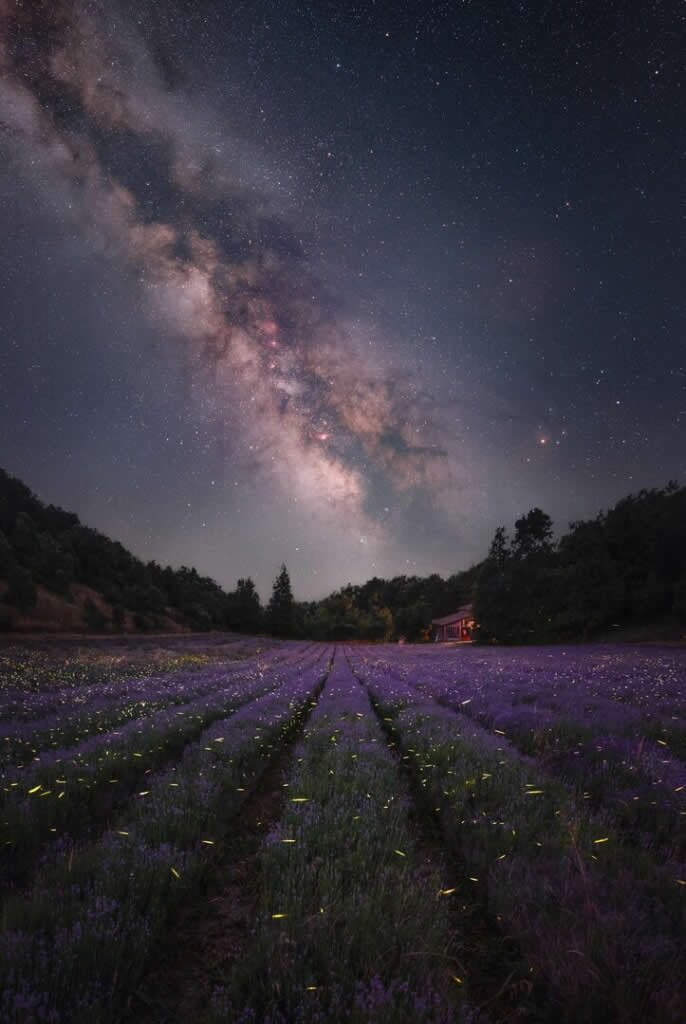
Appennino Bolognese, Italy – Among rows of blooming lavender, the air filled with fragrance, fireflies appeared like small lanterns beneath a sky dominated by the summer Milky Way, a perfect meeting between the wonders of Earth and the night sky above.
22. « Standing on the Shoulders of Giants » by Nacho Peláez
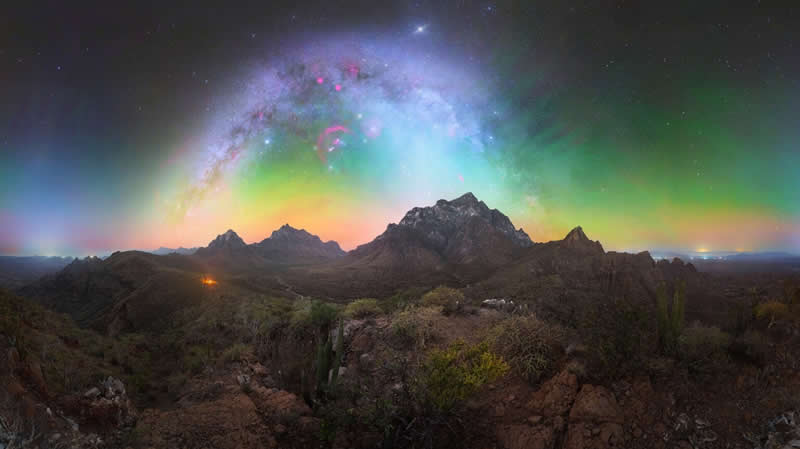
Mexico, Baja California Sur, La Giganta – This photograph was captured in the heart of the Sierra La Giganta, in Baja California Sur, following a two-day expedition from the small village of San Juan Londo. The final approach required an ascent of more than 800 meters by mule along a long-forgotten section of the historic Camino Real, once used by vaqueros and their donkeys to transport goods between remote settlements. This path has remained largely untouched for nearly 80 years.
23. « Botswana Baobabs by Night » by Stefano Pellegrini
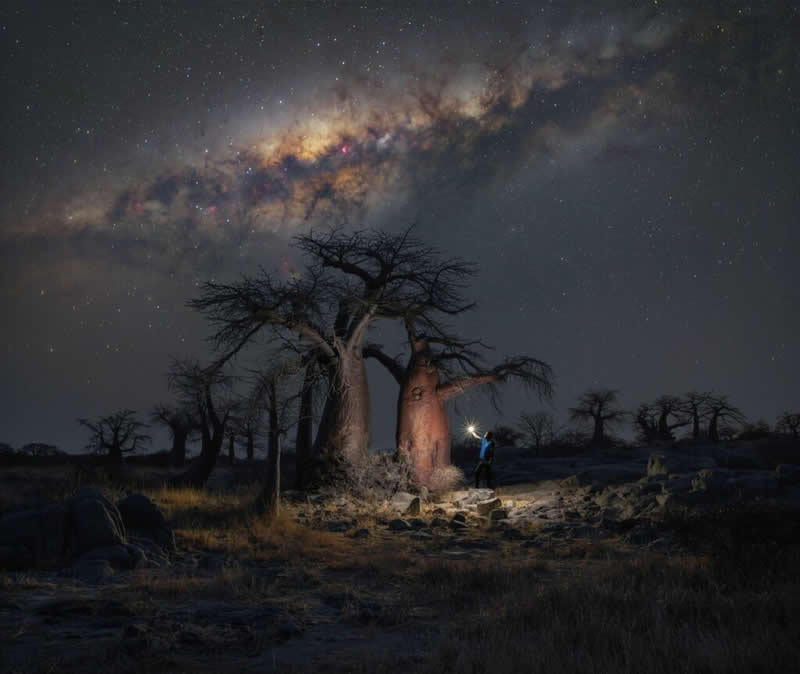
Botswana – I spent ten days traveling through Botswana, living out of my car and moving through remote desert landscapes in complete isolation, focused entirely on photographing the night sky. This location became the highlight of the trip: a small, ancient island rising from the middle of a vast salt pan.
24. « Where Earth Meets the Cosmos » by Andrea Curzi
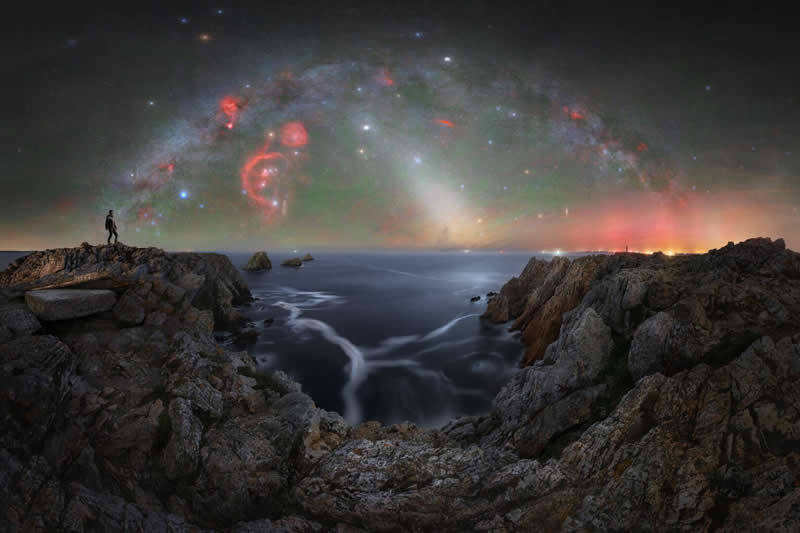
Pen Hir – Bretagne, France – A two-week camper trip along the coasts of Normandy and Brittany became a continuous struggle against wind and cloud cover, until a single clear night transformed the entire experience.
25. « Milky Way Over Syme Hut and Mt Taranaki » by Brendan Larsen
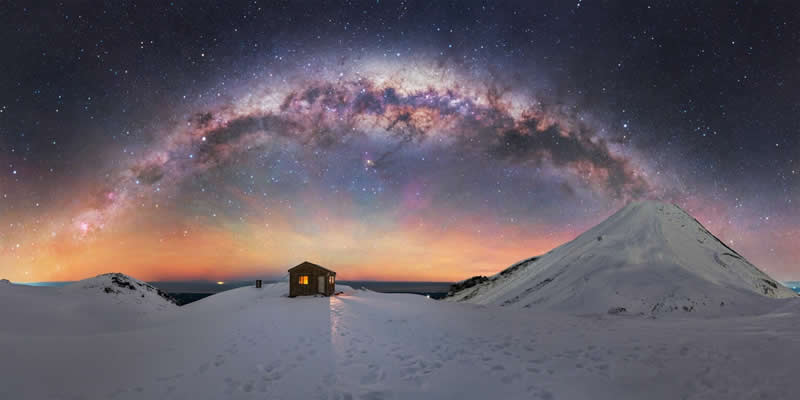
Syme Hut, Mt Taranaki, New Zealand – Reaching this location required a demanding ascent to Fanthams Peak on Mount Taranaki, involving over five hours of hiking through deep snow and ice in extreme conditions. With windchill dropping to around -15°C and a heavy 20kg pack, progress was slow and physically taxing, with each step forward often followed by sliding back in the soft snow. The journey culminated at what is known as the coldest hut in New Zealand’s North Island, making this one of the most challenging hikes I have ever undertaken.
FAQs:
What is the Milky Way Photographer of the Year?
It is an annual photography competition organized by Capture the Atlas that highlights the best Milky Way images from around the world, celebrating astrophotographers who capture stunning night skies with creativity, skill, and dedication.
How many photos were selected in 2026?
In 2026, a total of 25 winning photographs were selected from over 6,500 submissions. These images represent the best work from photographers across 15 nationalities, showcasing diverse locations and unique perspectives of the Milky Way.
Where were the winning photos taken?
The winning images were captured across 12 countries and regions, including New Zealand, Argentina, Chile, Spain, France, the United States, Australia, the United Kingdom, Poland, Italy, Mexico, and Botswana, highlighting diverse night sky locations worldwide.
Why is Milky Way photography important?
Milky Way photography encourages people to reconnect with the night sky and appreciate natural darkness. It also raises awareness about light pollution, which is gradually reducing the visibility of stars in many parts of the world.
What skills are needed for Milky Way photography?
Photographers need patience, planning, and technical knowledge of camera settings, composition, and timing. Understanding weather, moon phases, and dark-sky locations is essential to capturing clear, visually striking Milky Way images.